
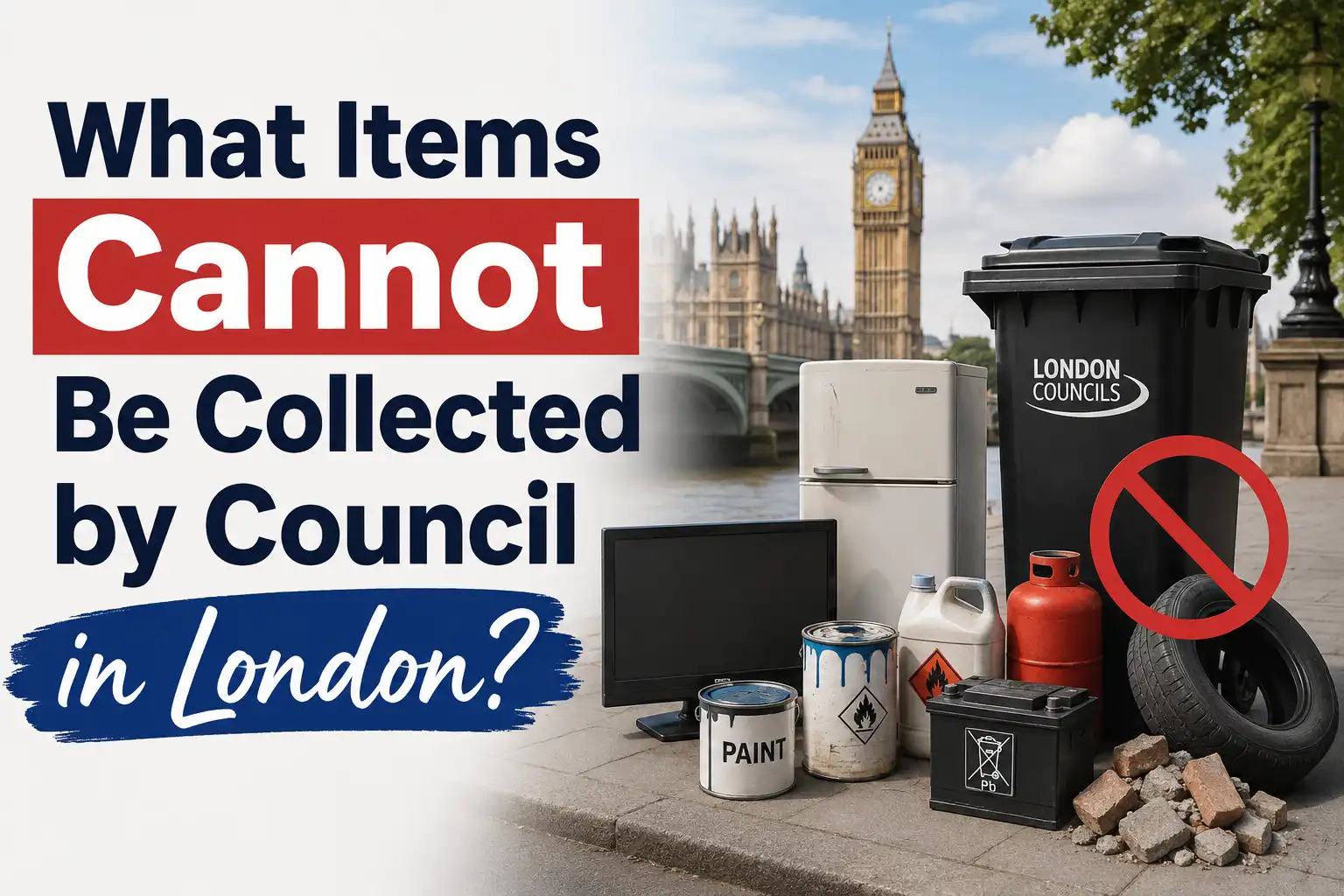
Most Londoners assume the council will take away anything they leave outside. This is not the case. Councils have strict rules about what they collect. Many items are refused for safety, legal, or recycling reasons.
Knowing what your council will not take helps you avoid fines and wasted time. It also helps you plan ahead for proper disposal. This guide covers the main items councils refuse across London boroughs. You will also learn what to do with these items instead.
Why Councils Refuse Certain Items
Councils have to follow national waste rules. Some items need special treatment. Others are too risky for normal collection crews to handle. Trucks also have weight and size limits.
Each London borough sets its own list of refused items. The basics are mostly the same. If you put refused items out, the council will leave them. You may also get a fine for fly-tipping.
Hazardous Waste
Hazardous waste is the biggest group of refused items. These materials can harm people, animals, or the environment. Council crews are not trained to move them safely.
Common hazardous items include paint tins, old fuel, motor oil, and car batteries. Pesticides, garden chemicals, and weed killers are also refused. So are pool chemicals and household cleaners in large amounts.
You must take these items to a Household Waste Recycling Centre. Most centres in London have a special bay for chemicals. Always keep them in their original containers.
Asbestos and Building Materials
Asbestos is one of the most dangerous items in old homes. It was used in roofs, pipes, and floor tiles before the year 2000. Councils never collect asbestos through normal services.
You need a licensed contractor to remove it. The waste must go to an approved site. Some councils offer paid asbestos pick-ups, but you must book in advance.
Other building waste is also refused. This includes bricks, rubble, concrete, plasterboard, and tiles. If you have done DIY work, the leftovers are your job to remove. A skip or a man-and-van service is the usual answer.

Tyres
Tyres cannot go in any council bin or kerbside collection. They cause fires at recycling plants. They also take up huge amounts of space.
Most tyre shops will take old tyres for a small fee. Some Household Waste Recycling Centres accept a few per year per household. Always check before you turn up.
Large White Goods
Fridges, freezers, washing machines, dishwashers, and tumble dryers are called white goods. Most councils do not include them in standard waste collections. Some offer a bulky waste pickup for a fee, but slots fill up fast.
Fridges and freezers are extra tricky. They contain gases that must be removed by trained staff. You cannot just leave them on the kerb.
For fast and proper white goods removal and disposal London, a private clearance service is often the easiest path. They handle the lifting, the transport, and the recycling.
Mattresses
Mattresses are bulky, heavy, and hard to recycle. Most councils refuse them with normal rubbish. Some councils offer a paid pickup, but you may wait two or three weeks.
Mattresses must be wrapped if left outside. Wet mattresses are often refused even when booked. Bed bugs and damage are common reasons for rejection.
If you need quick mattress disposal London, a private service can collect the same day. They strip the mattress for parts like springs, foam, and fabric.
Sofas and Large Furniture
Sofas, armchairs, wardrobes, and beds are not part of standard waste rounds. They are too big for the truck. Councils run a separate bulky waste service for these items, but rules vary.
You also need to think about fire labels. Sofas without the proper fire safety tag may be refused even when booked. The label is usually under the cushions.
Many people choose sofa removal London from a private firm to skip the wait. The crew comes inside, lifts the sofa, and takes it away. You do not have to drag it to the kerb.
Garden Waste
Garden waste is a mixed area. Some councils collect it in a special brown bin for a yearly fee. Others do not collect it at all.
Even when garden bins exist, large items are refused. This includes tree stumps, large branches, soil, turf, and rocks. Anything heavier than the bin allows is left behind.
For big garden clear-outs, a private collection is usually needed. Soil and turf must go to a proper site.
Electrical Items
Small electricals like kettles, hairdryers, toasters, and lamps are not part of bin collections. They contain metals and wires that need special recycling. This rule is called WEEE in the UK.
You can drop small items at most supermarkets with a recycling bin. Larger items like TVs and microwaves go to the recycling centre. Some boroughs have a paid pickup for electricals.
Clinical and Medical Waste
Needles, syringes, and used dressings are clinical waste. They cannot go in any household bin. The risk to bin crews is too high.
Your local pharmacy or GP can give you a sharps bin. The NHS arranges collection of full sharps bins for free in most cases. Never put loose needles in a black bag.
Commercial Waste
Councils do not collect waste from businesses through home services. If you run a shop, café, or office, you need a trade waste contract. This is true even for a small home business that makes a lot of waste.
Putting business waste in home bins is illegal. Fines can reach hundreds of pounds.
Items That Are Too Heavy or Too Many
Even allowed items can be refused if there are too many. Bin crews can only lift a set weight. A bin that is too full or too heavy will be left.
Extra bags next to the bin are often refused too. The rule changes by borough. Some allow one or two extra bags, others none at all.
What Are Your Options?
When the council says no, you have a few choices. The first is the Household Waste Recycling Centre. Most are free for residents, but you may need to book.
The second is the council’s bulky waste service. This works for sofas, beds, and white goods, but it is slow and limited.
The third is a private clearance team. They cost more than the council but handle everything quickly. The full bulky waste collection cost London depends on the size of the load and the items inside.
 CALL NOW