
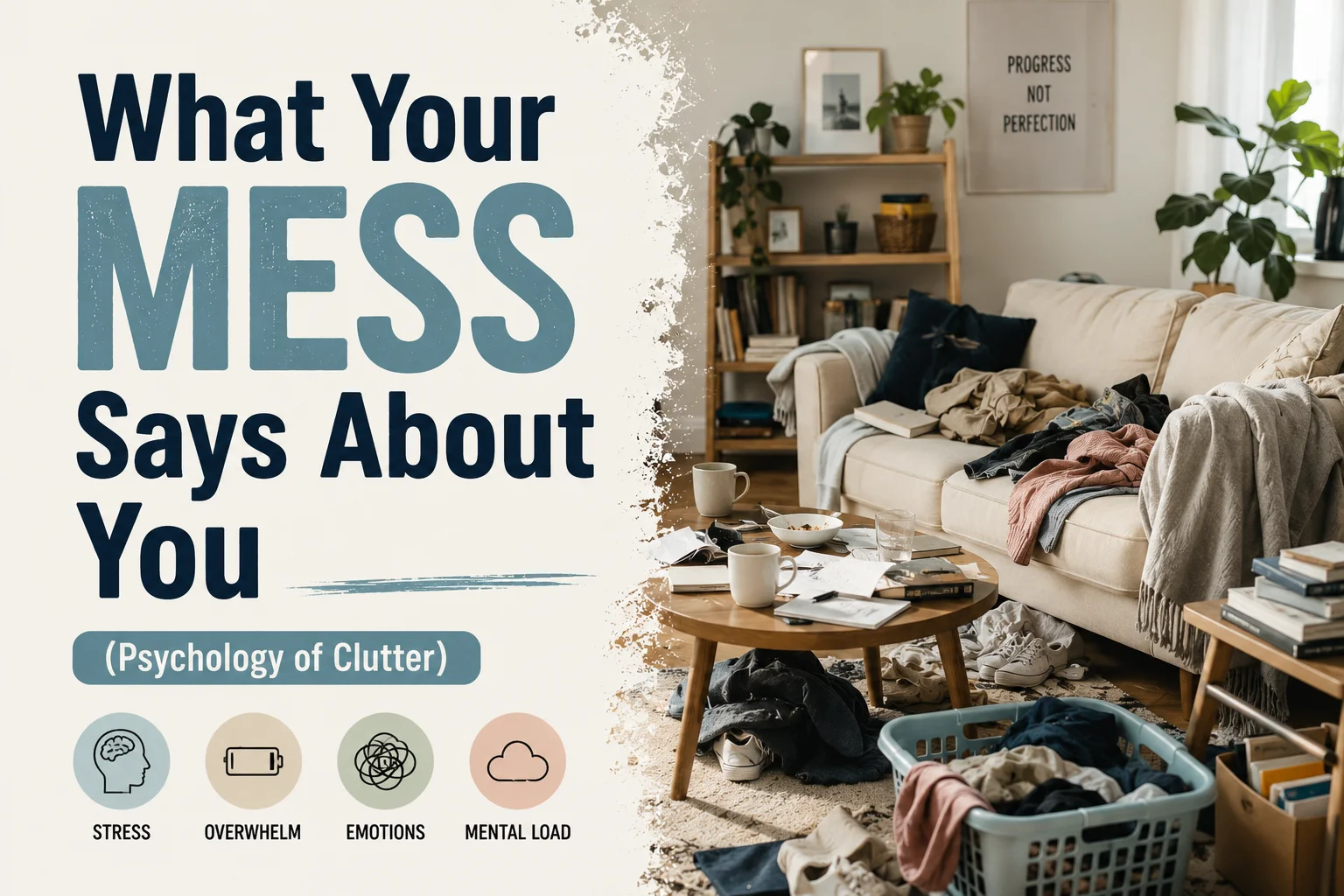
Look around your home. The state of your living space often acts as a mirror, reflecting your internal world back at you. This connection between our environment and our mind is a fascinating area of study.

Scientific research provides compelling evidence for this link. Studies from Princeton University used fMRI scans to show that our brains prefer order. Visual disorder can reduce our cognitive abilities.
This makes it harder for the average person to concentrate on daily tasks. Every individual has a unique relationship with their belongings.
What feels chaotic to one person might feel creatively stimulating to another. Recognising your own patterns is the first step toward cultivating a more peaceful and supportive home.
This guide offers a comprehensive look at how your physical surroundings influence your mental clarity. It explores their significant impact on your overall happiness in daily life.
Key Takeaways
- Your home environment is often a direct reflection of your current internal state.
- Neuroscience research indicates that visual disorder can hamper focus and cognitive function.
- Each person’s tolerance for and relationship with their belongings is highly individual.
- Understanding this connection is crucial for managing your daily life and well-being.
- A disordered space can have a significant impact on your mental clarity and stress levels.
- This exploration aims to help you create a home that supports peace and productivity.
Understanding Clutter and Its Psychological Roots
A recent survey by a storage company highlights a common British reality: most households contain items that are not in their proper place. Data from Access Box reveals over 90% of Brits have some form of clutter in their home. For many individuals, a visually rich space feels creatively stimulating. For others, it becomes a significant problem.
The Impact of Clutter on Daily Life
When your living area is filled with disorganised piles, it can reduce your ability to focus. Essential tasks become harder to complete. Experts like those at The Declutter Hub note this impact varies. Understanding your own environment is key to improving daily productivity.
| Aspect | A Cluttered Environment | An Ordered Environment |
|---|---|---|
| Cognitive Load | High, causing mental fatigue | Low, promoting mental clarity |
| Visual Stimulation | Can be overwhelming or inspiring | Calm and predictable |
| Task Efficiency | Often reduced due to distractions | Generally improved with clear space |
| Stress Level | Tends to be elevated | Typically lower and more manageable |
| Perceived Control | Can feel chaotic and unruly | Fosters a sense of mastery and calm |
Why Order Matters to the Brain
Scientists at Princeton University used fMRI studies to show our brains function best with order. Visual disorder competes for your attention. This reduces your cognitive capacity. Creating a supportive home starts with recognising these psychological roots.
Exploring Clutter Personality Psychology
The specific items that accumulate in your home are not random. They form a narrative about your inner world. Psychologist Helen Sanderson has identified six common patterns in how people collect and keep things.
Understanding your dominant pattern offers hidden truths. It reveals how you interact with your physical surroundings. This is more complex than labelling yourself as messy or tidy.
Your habits are deeply rooted in your personal history. By examining these categories, you see why some items are hard to release. Others seem easy to discard.
This knowledge serves as a strong foundation. It helps you recognise the patterns that dictate how you manage belongings. Identifying your clutter personality is a key step towards a calmer space.
Unpacking Emotional Attachments and Memories
Behind every kept item lies a narrative, a fragment of personal history that resonates with our identity. These objects often become anchors to specific people or times.
Many individuals form deep bonds with possessions because they offer a sense of security. They serve as tangible links to past relationships and cherished experiences.
Sentimental Attachments Explained
Psychologist Helen Sanderson notes that objects can be a means to exercise control. This is especially true if one felt powerless in earlier life.
Holding onto every memory can inadvertently block personal progress. It may prevent you from moving forward with clarity and purpose.
Understanding why some items are harder to release is key. These attachments are frequently tied to significant milestones or losses.
Recognising the emotional weight of your belongings is a vital step. It allows you to curate your surroundings for improved mental wellbeing.
| Reason for Keeping Item | Common Emotional Driver | Potential Impact on Space |
|---|---|---|
| Connection to a loved one | Preserving a relationship | Creates sentimental clusters |
| Symbol of a past achievement | Maintaining a sense of pride | Can lead to display areas |
| Fear of forgetting an experience | Securing a memory | Results in stored boxes |
| Comfort during uncertain times | Seeking emotional safety | Often accumulates near rest areas |
The Happy Heaper: Embracing Organised Chaos
Do you thrive amidst piles of papers and half-finished projects, yet still know where everything is? This is the realm of the Happy Heaper, a pattern defined by experts Lesley Spellman and Ingrid Jansen. For this individual, domestic order frequently falls down the list of priorities.
Identifying the Happy Heaper Traits
Spellman notes that if you feel surrounded by ventures each needing a piece of you, this is a classic sign. Jansen explains these people are often born procrastinators. They wait until every piece of a puzzle is in place before they begin.
Their environment exhibits a unique, organised chaos. It may look disorganised to others, but they can usually locate what they need within it.
Strategies for a Tidy Workspace
First, acknowledge your natural pace. You are likely a tortoise, not a hare, when it comes to managing your stuff. Slow, consistent efforts yield better results.
Begin with your desk. Implement one small tactic: dedicate five minutes at the end of your day to clear the surface. This micro-habit helps you reclaim control over your time without dampening your creative flow.
The Kind Keeper: When Sentiment Meets Clutter
For some, the act of acquiring new possessions brings a genuine sense of joy and comfort. This pattern defines the Kind Keeper, whose home fills with objects tied to happy memories and positive feelings.
Emotional Value of Keepsakes
The Kind Keeper often faces a common struggle. They adore the thrill of finding a new treasure and find it incredibly hard to part with sentimental items.
As decluttering expert Ingrid Jansen explains, shopping is frequently a form of leisure for this personality. It is not just about buying things; it is about capturing a moment of happiness.
This tendency is reinforced by a cognitive bias known as the Endowment Effect. It causes people to overvalue possessions they already own. This can lead to spending more money than necessary on new acquisitions.
Well-meaning family or friends might urge you to clear your space. However, this pressure can create anxiety if you are not emotionally ready to let go.
Learning to separate an object’s true utility from its emotional weight is a kind first move. It is a gentle way to start simplifying your surroundings and your life.
The Warm Weeper: Clutter as Emotional Comfort
Sometimes, our possessions act as a shield, buffering us from the raw edges of grief or difficult connections. For the Warm Weeper, a crowded home isn’t about laziness. It is a carefully constructed world of tangible comfort following a significant loss or during strained relationships.
Navigating the Pain Behind the Clutter
This pattern involves using belongings as a diversion from overwhelming feelings. The items provide a sense of safety when facing emotional pain.
Decluttering expert Ingrid Jansen cautions that well-meaning help from others can backfire. If it comes before you are ready, it can feel like an invasion, causing more distress.
The key is to start on your own terms. Begin in a less emotional room, like the kitchen or a bathroom. This builds confidence with simpler decisions.
As organiser Lesley Spellman notes, even these straightforward spaces hold items with history. You may find a mug from a past holiday or old bath products that stir memories.
Navigating this requires immense patience. Move slowly and treat yourself with compassion as you sort through the things that have offered you solace.
The Harassed Housekeeper: Battle of Everyday Clutter
Maintaining a tidy home can sometimes feel like a solitary and relentless struggle against the tide of daily life. If this sounds familiar, you may fit the Harassed Housekeeper pattern. This experience is common for the primary organiser in a busy household.
Balancing Responsibilities and Decluttering Efforts
You might feel you are the only one who cares about order. Organiser Lesley Spellman notes that other family members often contribute to the mess. This makes tidying up feel like an uphill battle.
Juggling this with other duties is a key challenge. The constant visual clutter can drain your energy. It makes focusing on your own priorities much harder within the family household.
Practical Daily Reset Tips
Experts Lesley Spellman and Ingrid Jansen advocate for simple daily resets. Ingrid Jansen specifically recommends a brief morning and evening tidy-up. This habit helps you stay on top of mess before it builds up.
A quick nighttime reset is particularly powerful. It allows you to start the next day with a clean slate. This simple action can significantly reduce feelings of anxiety about domestic chaos.
Consistent, small efforts are the most effective long-term strategy. They help balance your responsibilities and keep your home running smoothly for everyone.
The Lifetime Lingerer: Overcoming a Lifelong Issue
When piles of laundry or dishes have been a constant feature for decades, it is easy to believe change is impossible. This pattern defines the Lifetime Lingerer, someone who feels their identity is intertwined with their home’s state.
They often see the general mess as a permanent part of who they are. It is a cycle that can feel deeply ingrained.
Breaking Free from Long-Standing Patterns
Decluttering expert Ingrid Jansen offers a crucial insight. While a surge in disorganisation might seem sudden, it is usually a lifelong problem.
This means a patient, gentle approach is essential for lasting change. Rushing the process often leads to frustration and relapse.
Freedom from these habits is absolutely possible. The key is to take your time and break large, daunting tasks into bite-sized to-dos.
You do not need to clear the entire spare room today. Focus on one drawer, one shelf, or one bag of old clothes.
Committing to one small step each day builds momentum. These consistent efforts help you reclaim authority over your surroundings.
Over weeks and months, these minor victories add up to major progress. They gently help you move away from seeing yourself as a lifelong collector of chaos.
Exploring Additional Clutter Personalities
Beyond the common patterns, psychologist Helen Sanderson’s research reveals a broader list of distinct tendencies in how we manage our possessions. This extended catalogue helps explain why certain categories of items become problematic.

From Tech Clutterers to Paper Enthusiasts
One notable type is the tech clutterer. This individual accumulates anonymous wires and obsolete, broken devices. These items often represent a fear of future need or a difficulty with decision-making.
In contrast, the paper clutterer holds onto old bills and bank statements. Experts suggest this can be a defence mechanism. It helps avoid confronting the emotional pain of past financial losses or mistakes.
Understanding Sentimental and Entertaining Types
Another category is the entertainment clutterer. They may retain vast collections of DVDs, vinyl, or books. This habit often signals a reluctance to let go of a former self or cherished era.
Understanding these diverse personalities shows that your stuff is rarely just physical. It frequently mirrors an internal need for security and control.
Recognising your specific type from this list is the crucial first move. It allows you to select the most effective strategies to clear your home. This process directly supports improved mental wellbeing.
Identifying Your Own Clutter Habits
Before you tackle the physical piles in your home, it’s wise to first examine the mental and emotional patterns that created them. This self-awareness forms the essential foundation for any lasting change. It shifts the focus from the mess itself to the underlying reasons it exists.
Self-Reflection and Habit Awareness
Rita Wilkins, the Downsizing Designer, encourages every person to ask two key questions. What is truly behind your accumulated items, and what are you afraid of losing if you let them go?
This kind of self-reflection is a vital step. It helps you understand why you avoid releasing things and where you typically get stuck. By identifying these habits, you stop blaming yourself and start building systems that support your unique way of operating.
Compassion for yourself is essential here. Exploring the emotional roots of why you keep certain belongings requires a gentle, non-judgemental approach.
Tools for Personal Assessment
Structured guidance can make this introspective process much clearer. Tools like Rita Wilkins’s Emotional Clutter Workbook provide a practical framework.
Using such a resource can help you gain the awareness needed to change your habits and simplify your life. It moves you from vague feelings of overwhelm to a concrete understanding of your specific patterns.
This assessment is not about labelling your personality. It’s about giving you the insights to create a home that works in harmony with your nature, not against it.
Initial Steps to Decluttering Your Space
The journey to a clearer home begins with a single, manageable action. Trying to tackle everything at once often leads to frustration. Instead, focus on small, consistent efforts that build lasting change.
Small Tasks for Big Progress
As organiser Rita Wilkins advises, start with just one drawer or a single shelf. This approach makes the task feel achievable. Another powerful method is to focus on removing just five items from your home each day.
Using a timer can be incredibly helpful. Set it for 15 or 20 minutes and sort through your stuff. This creates a clear boundary for your effort and helps you stay focused.
Remember, this process is not about perfection. It is about making consistent progress in the time you have available. These small victories create momentum, slowly transforming your space into a more peaceful and supportive environment.
Effective Decluttering Strategies for a British Home
Transforming a crowded living area into a serene sanctuary is a goal shared by many across the UK. With data showing 90% of Brits have some form of clutter, finding smart ways to manage your belongings is a common challenge. The right approach can turn a daunting task into a rewarding project.
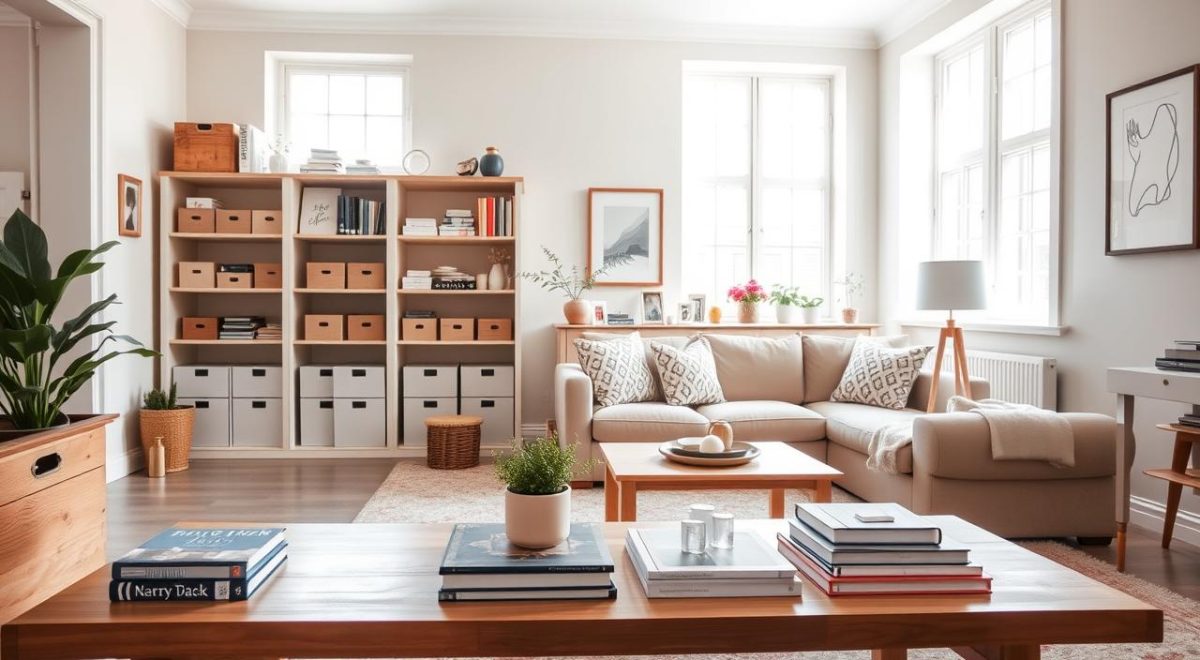
Embracing Minimalism in Daily Life
Minimalism in a British home is not about empty rooms. It is about accepting that life changes. You no longer need to hold onto everything from a past chapter.
A great first step is to get rid of items with no current use. Sell jewellery or clothes on platforms like Vintage Cash Cow or Depop. This ensures your things find a new home instead of going to waste.
Donating usable items is another powerful strategy. It can help you save money on storage and supports others in your community. This process of letting go allows you to create a living space that truly reflects who you are today.
Decluttering your home is ultimately about making room for what matters now. Each item you release makes your daily environment more peaceful and supportive.
Mental Wellbeing: How Clutter Affects Anxiety and Focus
Managing your mental wellbeing involves more than just thoughts; it is directly influenced by the physical environment you inhabit. For many people, excessive belongings create a persistent problem in their daily lives.
This visual chaos makes it hard for your brain to filter out competing things. The result is often increased stress and difficulty focusing on important tasks.
Cognitive Impacts and Stress Levels
When your surroundings are full of disorganised stuff, your mind is constantly processing it all. This sensory overload can significantly raise feelings of anxiety.
It tires your brain, leaving less mental energy for the stuff that truly matters. Your working memory is occupied by the visual noise, making it harder to think clearly.
Building a Clear Mind Through Decluttering
The act of decluttering is a powerful first step towards calm. It helps you reclaim your space and your time.
Start by making a list of one area to tackle. Removing unnecessary things frees up both physical and mental space.
This process creates a strong sense of control. It allows you to stay on top of your environment and reduces daily distractions.
As you clear your space, you often find your mind becomes clearer too. This improved focus can positively affect your relationships and other areas of your lives.
Dedicating time to this task saves you time and energy later. Your home transforms into a peaceful place that supports your mental wellbeing.
Conclusion
Ultimately, the state of your living space is a dialogue between your past experiences and your present needs. Understanding your own patterns is the most effective way to move forward. It helps you stop self-criticism and start making real progress in your life.
Whether you relate to one specific tendency or several, there are always things you can do to improve your home environment. By recognising why you keep certain items, you empower yourself to let go of the stuff that no longer serves you.
Many people find that beginning this process brings a renewed sense of freedom and control over their daily lives. Remember, every person is unique. The best way to manage your belongings is to find the strategies that work for your specific needs over time.
We hope this guide has provided the clarity to transform your home into a peaceful space that truly supports your wellbeing.
 CALL NOW