
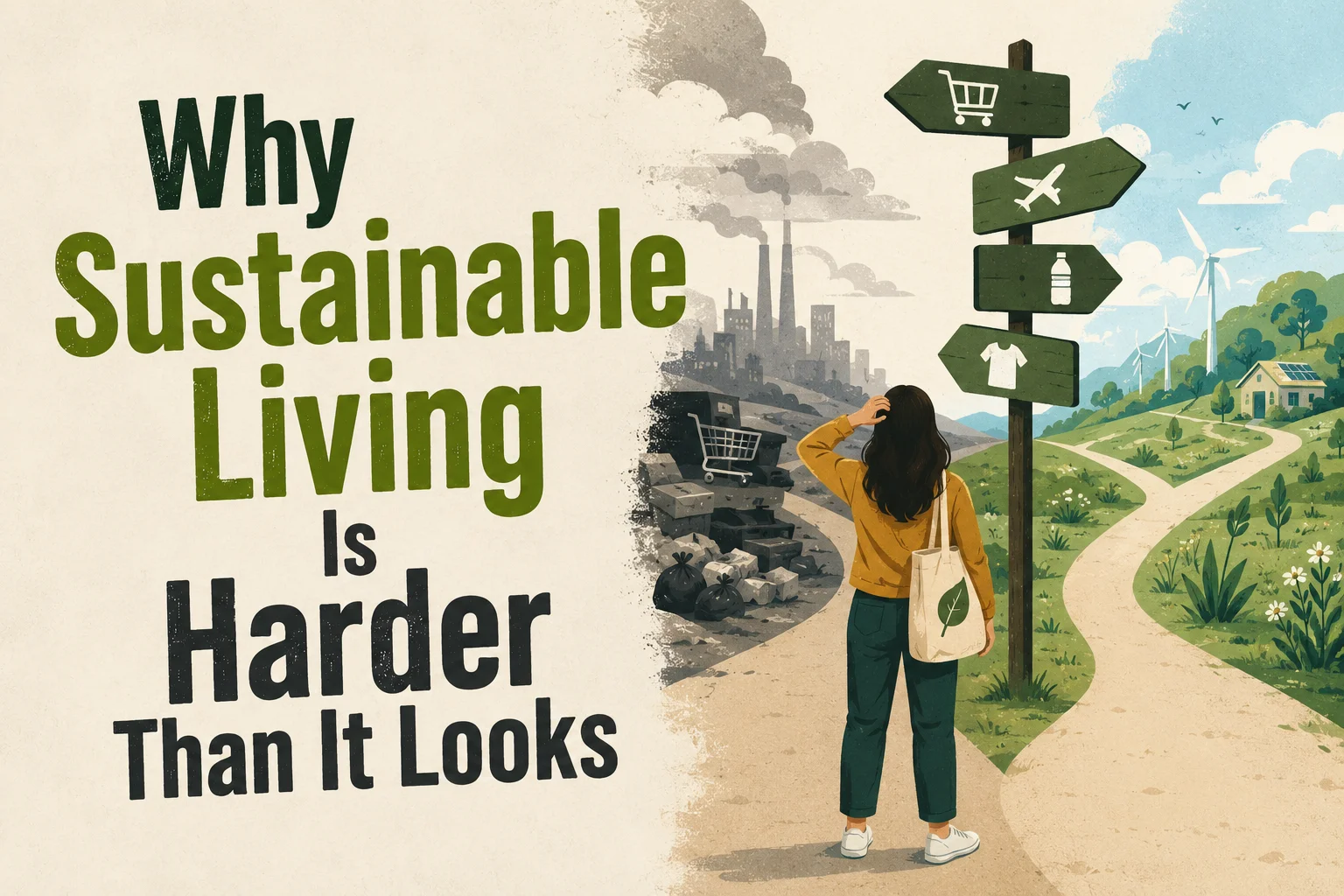
Many of us start with good intentions. We want to make greener choices and reduce our impact on the planet.
The reality, however, often proves more complex. Simple resolutions can quickly become tangled in the web of modern life.
Consider a startling fact. A 2019 Oxfam report found new clothes bought in Britain produce more carbon emissions than driving a car around the world six times.

This highlights a core issue. Our daily habits have hidden consequences that are difficult to see at first glance.
This article explores the gap between intention and action. We will look at the systemic barriers that make a truly sustainable lifestyle challenges UK residents face more nuanced than they first appear.
Key Takeaways
- Initial enthusiasm for greener habits can be difficult to maintain over the long term.
- Our personal consumption choices often have significant, unseen global impacts.
- Practical application of sustainability principles can feel overwhelming for beginners.
- Systemic barriers within modern society complicate personal efforts towards sustainable living.
- Understanding the true environmental cost of daily living requires looking beyond surface-level actions.
- The path to a greener life is frequently fraught with unexpected obstacles.
Understanding Sustainable Living
Every purchase and habit we form today writes a story for the environment of tomorrow. This concept is about making choices that allow our way of life to continue without harming the natural world.
It means being responsible for the things we use, from the clothes we wear to how we heat our home.
Defining Sustainability in Everyday Life
Many people find the term ‘sustainability’ abstract. In practice, it means performing actions in a way that does not damage the environment for future generations.
Simple changes in our home can make a big difference. Managing energy heating and reducing waste are core actions.
Buying second-hand furniture or choosing durable products are clear examples.
| Area of Life | Common Practice | Sustainable Alternative |
|---|---|---|
| Clothing | Buying new items each season | Choosing quality, repairing, or swapping clothes |
| Home Energy | Leaving heating on constantly | Using a programmable thermostat and better insulation |
| Furniture | Purchasing new, mass-produced items | Opting for second-hand or sustainably sourced pieces |
| Household Waste | Sending everything to landfill | Composting food scraps and recycling rigorously |
The Importance of Sustainable Choices for the Future
The choices we make now directly affect the climate and available resources for others later. By cutting down on emissions and waste, we help preserve the planet.
Companies play a significant part in this shift. Their products and operational ways influence what items we consume every year.
Adopting these ways is an investment in a healthier future for everyone.
Real-Life Challenges in Adopting a Greener Lifestyle
Early adopters testing Zero Waste practices in 2008 found good intentions met the hard wall of daily routine. The positive vision of “abundance for all, forever” from McDonough and Braungart guides us, yet the path is filled with practical tests.
Balancing Time, Effort and Personal Values
Many people feel overwhelmed by the effort needed. Changing deep-rooted habits demands significant time and constant attention.
This can feel like a major life change. Researching the true impact of our choices, from home heating to waste, is a lengthy process.

Confusion Between Marketing and Genuine Sustainability
Distinguishing real sustainability from clever marketing is tough. Many companies use vague terms to sell products, clothes, or furniture.
We must be critical of the things we buy. Not all eco-labels benefit the planet or climate.
| Common Marketing Term | What It Often Means | Genuine Indicator to Look For |
|---|---|---|
| “Eco-Friendly” | A vague claim with no standard definition | Specific certifications (e.g., EU Ecolabel, Energy Star) |
| “Natural” | May contain some plant-based ingredients | Full ingredient transparency and ethical sourcing |
| “Green” Packaging | Minimal plastic reduction, often still non-recyclable | Packaging made from recycled, home-compostable materials |
| “Sustainable” Collection | A small line within a larger, unsustainable brand | Company-wide policies on emissions, waste, and fair labour |
Focusing on small, manageable actions helps avoid burnout. This way, greener living becomes a steady part of your world.
Two major hurdles stand in the way of making lasting changes: finding the right items and affording them. These practical tests can stall progress before it begins.
Accessibility and Availability Issues
Many people struggle to source green products, clothes, or furniture locally. This lack of access makes the change feel impossible.
It takes time to find good alternatives. Using online platforms helps people source materials that match their values.
Resources like the Environmental Working Group (EWG.org) verify the safety of home items. This tool supports better choices.

Price and Perception Barriers
A common belief is that greener living is costly. Many companies mark up eco-friendly products, creating a financial barrier.
This perception ignores long-term savings on energy, water, and waste. Every small action cuts emissions and helps the climate.
| Common Barrier | Typical Impact | Practical Response |
|---|---|---|
| High Upfront Cost | Prevents initial switch to better products. | Focus on one life area at a time, like home energy. |
| Limited Local Options | Makes finding durable things difficult. | Use trusted online markets for second-hand or ethical goods. |
| Greenwashing Hype | Confuses real sustainability with marketing. | Check certifications and resources like EWG.org before you buy. |
| Perceived Inconvenience | Makes new habits seem too hard. | Start with one simple swap, like a cleaning product. |
Do not get discouraged by these challenges. Each conscious choice encourages better options for everyone. It is a vital part of a positive way forward.
Practical Tips for Overcoming Everyday Obstacles
Everyday obstacles to eco-conscious living can be tackled with simple, clever strategies. The key is to focus on small wins that fit into your current routine.
This way, you build momentum without feeling overwhelmed. It’s a practical part of a long-term change.
Small Wins: Changing Habits Step by Step
Start with one specific habit. For example, washing synthetic clothes in a Guppy Friend bag captures plastic microfibres.
This simple action prevents this waste from entering our water systems. It shows how a small tweak can have a positive impact.
Changing habits takes time and patience. Focus on one life area, like home energy use or reducing waste.
Utilising Local and Online Resources
Many people find great tips and products online. Websites offer guides for home upgrades or sourcing better materials.
Local sources are also valuable. Community groups can provide support and share items like furniture.
Companies now offer refill stations for cleaning products. This cuts plastic waste in your home each year.
Make sure to research your choices. Every conscious decision helps the planet and our climate.
Environmental, Economic and Social Considerations
The true cost of our daily habits extends far beyond the price tag. Our consumption has a triple impact: on the environment, our wallets, and society.
More than two tonnes of clothes are bought every minute in Britain. This drives significant carbon emissions and waste.
Impact on Carbon Emissions and Waste Reduction
Cutting carbon means rethinking how we use energy and materials. Simple choices at home can lower your emissions.
Fixing a leaky tap saves water. Choosing durable furniture over fast-made items reduces waste sent to landfill.
This collective change is vital for the planet. It helps stabilise our climate for future generations.
The Broader Role of Communities and Companies
Companies must lead by offering better products. They should use recycled materials and clean energy.
Local groups provide support for people wanting to live sustainably. Sharing things and skills makes this way of living easier.
It takes time to shift our collective habits. Yet, every small action is a crucial part of the solution for our climate.
Inspiring Local Action and Personal Change
Public opinion shows a strong desire for swifter climate action. Over half of Britons want the UK government to reduce emissions faster to set an example.
This collective will is a powerful starting point. It shows that many people are ready to support a shift in how we care for our environment.
Engaging with Community Initiatives for Climate Action
Local groups turn this support into real change. Setting up a community energy project or a clothes swap shop are great examples.
These actions directly cut waste and lower carbon emissions in your area. They make it easier for people to live sustainably.
Such initiatives also send a message. They show companies and officials that people demand responsibility for their impact on the climate.
By working together, communities share things like tools, skills, and materials. This reduces everyone’s need for new items and products.
It takes time to build these networks. The collective effort, however, leads to better management of water and energy in our homes.
We must push for systemic shifts. This ensures the sources and materials we use are ethical.
Every person has a part to play. Joining with others helps create a healthier future for our home and climate.
Conclusion
Creating lasting environmental change requires persistence from everyone, not perfection from a few. This is a long-term journey where patience is key.
The collective impact of millions of people choosing to live sustainably is essential for our climate. Every small effort adds up to a significant result.
Focus on reducing carbon emissions and managing your home energy use. Making better choices about the products we buy is another powerful step.
We must hold companies accountable for the things they produce. Their actions have a major impact on our world.
Remember, imperfect action by many beats perfect action by a handful. Your daily choices create a ripple effect that encourages others.
 CALL NOW