
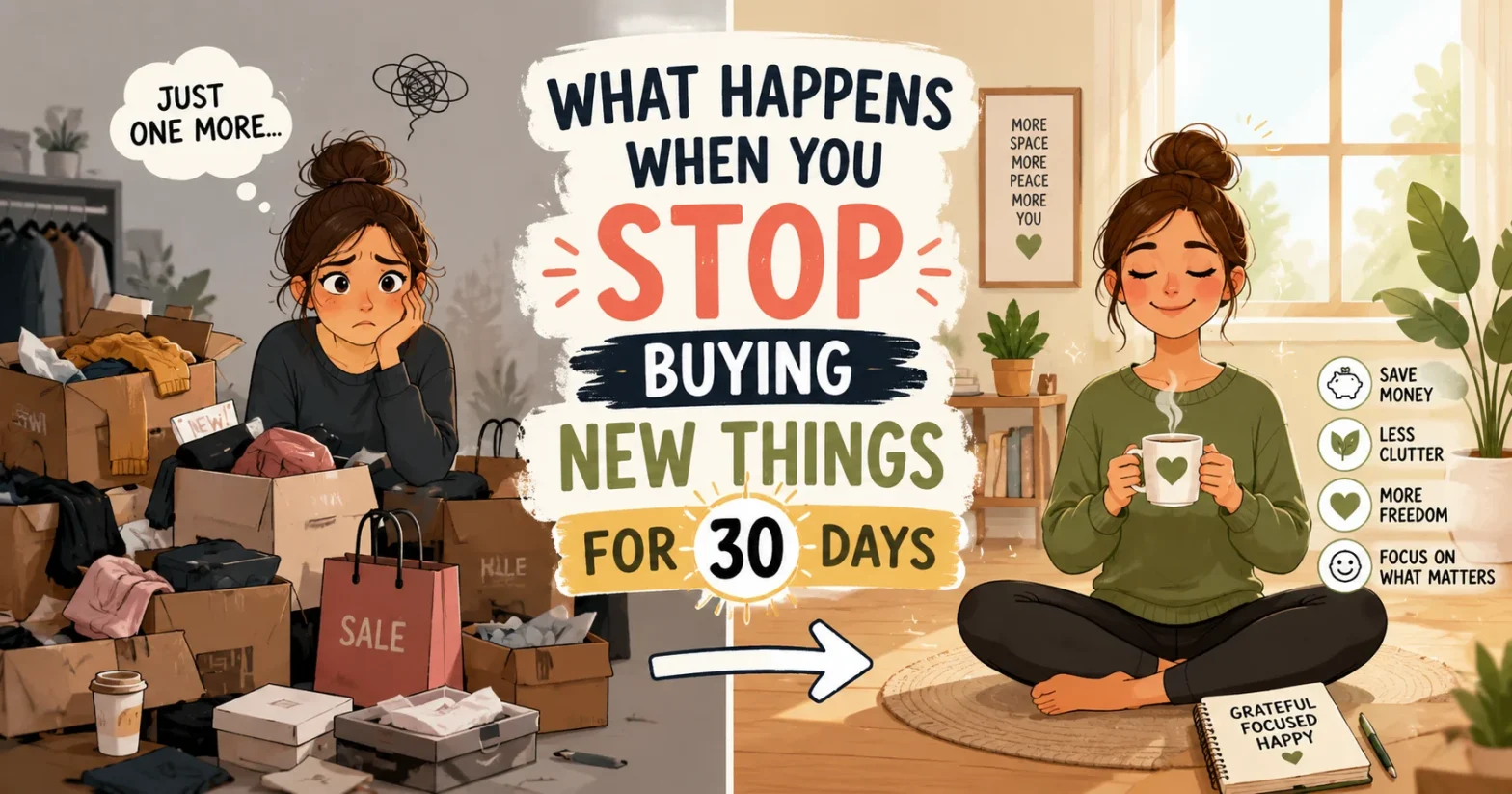
Imagine pressing pause on all non-essential purchasing for a full month. This is the core idea behind a growing movement towards underconsumption, explored in a recent article by Alex Holder.

Choosing to halt new acquisitions for 30 days can have a profound effect on your wallet. The average household in Britain wastes around £7 of food each week. A conscious spending break helps you save that cash and break free from the cycle of constant consumption.
This period isn’t just about money. It gifts you time and space to evaluate your daily choices. It’s the first step towards a more intentional and sustainable way of living your life. Our guide provides the essential tools to help you succeed in this 30-day undertaking.
Key Takeaways
- Reclaim control over your personal finances.
- Break the cycle of impulsive purchasing.
- Discover the value of your existing possessions.
- Reduce household waste and save money.
- Cultivate more mindful spending habits.
- Gain extra time by not browsing shops or websites.
- Lay the foundation for a more sustainable lifestyle.
Embracing the No Buy Challenge UK
A growing trend asks you to step away from the checkout for a set period. This movement focuses on underconsumption, where you repair or repurpose what you already own.
It directly tackles waste, like the half a billion cheap electrical items discarded in 2023.
Defining the No Buy Challenge
This personal undertaking involves a commitment to avoid non-essential purchases. The timeframe can be a month or even a full year.
Its core goal is to break the cycle of constant acquisition. You learn to value your existing possessions more.
Embracing this idea can significantly reduce clothing waste. The UK discards millions of garments annually.
Shifting your mindset towards sustainability is a powerful benefit.
Understanding the Benefits of Underconsumption
The advantages extend far beyond your bank account. You reclaim control over your personal finances and save a notable amount of money.
It also gifts you extra time, once spent browsing shops or websites.
Many influencers on social media promote this concept. They help followers break free from the pressure of constant shopping.
You can use a dedicated app or a simple journal to track your progress. This ensures your spending habits align with your long-term goals.
Understanding your triggers, like boredom, is key to changing your financial life. Even avoiding small impulse purchases contributes to a healthier budget.
This practical way forward fosters a more mindful approach to daily living.
Preparing for Your 30-Day No Buy Challenge
Your journey towards intentional spending starts with a clear plan and the right mindset. Solid preparation is the key to a successful month. It turns a difficult idea into a manageable and rewarding practice.
Setting Personal Goals and Adjusting Your Mindset
Begin by writing down your big life goals. Visualising what you want to achieve with your saved money provides powerful motivation. This simple act helps you stay focused for the full 30 days.
Adjusting your mindset is equally vital. Recognise that you likely have a full wardrobe of clothes already. Many people use a digital app to catalogue their clothing. This helps them rediscover forgotten items and reduces the impulse to go shopping.
If you feel a strong urge to spend money, pause. Reflect on your immediate thoughts. This moment of awareness can help you avoid an expensive impulse.

Organising Your Budget and Allocating Essentials
A detailed budget is your roadmap. Use a worksheet to plan essential food and living costs. This ensures you cover necessities without purchasing extra items.
Organisations like Christians Against Poverty (CAP) offer excellent resources for managing your money. A popular method is the 50/30/20 rule. It helps you keep on top of savings goals during your no-spend challenge.
| Budget Planning Method | How It Works | Best For |
|---|---|---|
| Traditional Itemised List | List every expected cost for food, bills, and transport. | Those who want precise control over every pound. |
| The 50/30/20 Rule | Allocate 50% of income to needs, 30% to wants, 20% to savings. | Building consistent savings habits over a full year. |
| Envelope System (Digital) | Divide money into virtual categories in a budgeting app. | Visual learners who need to see limits for different spending areas. |
Planning your meals for the week is one of the most effective ways to manage your food budget. It prevents waste and stops you from ordering costly takeaways. By setting these clear rules, you create a structured way to improve your overall quality of life.
You can find more helpful tips on a trusted financial blog. These resources ensure your spending habits align with your long-term goals.
Practical Strategies to Avoid New Purchases
The key to a successful spending pause lies in deploying effective, everyday strategies. This involves understanding what drives your purchases and having ready alternatives to replace the habit.
Identifying Spending Triggers and Impulse Cues
Recognising your personal triggers is the first step. Common cues include browsing social media or feeling bored during the day.
When the urge to spend money strikes, pause. Acknowledge your immediate thoughts. This simple act of awareness can stop an impulse purchase.
Implement the powerful 24-hour rule. Leave a desired item in your online basket for a full day. This gives you time to decide if you truly need it.
Tracking these moments in a journal helps you see patterns in your spending habits.

Exploring Free Alternatives to Retail Therapy
Replace the shopping habit with a free activity. Taking a long walk or organising your wardrobe can make you feel fulfilled.
Explore free local options for entertainment. Yoga in the park or visiting a museum costs nothing. These activities enrich your living without touching your budget.
Rediscover the clothing you own. Some people use a digital app to catalogue their wardrobe. This helps you create fresh outfits without buying new clothes.
For long-term goals, an accountability buddy can help you stay on track throughout the year. Shifting your mindset to appreciate what you have is a powerful end result.
Tracking Progress and Reflecting on Spending Habits
Keeping a record of your daily choices shines a light on hidden spending patterns. This process turns your 30-day undertaking into a powerful learning experience. You move from simply avoiding purchases to understanding the ‘why’ behind them.
Journalling Your Experience and Savings
Maintaining a detailed journal is crucial. Note your daily thoughts and any urges to spend money. This helps you identify emotional triggers for shopping.
Tools like the Starling app can automate this. You can tag transactions as “Impulse Buys” to monitor habits visually. Seeing the total money saved, as Mia Westrap did over a year, provides strong motivation.
Evaluating Changes in Your Spending Mindset
Review your journal entries weekly. Look for which strategies worked best to avoid unnecessary items like snacks or cookies. This review is key to long-term change.
Many people find their mindset shifts over time. You start to appreciate the clothes in your wardrobe more than wanting new things. Sharing this journey on social media can connect you with others.
The ultimate goal is to build sustainable habits. These will benefit your financial life for many years to come.
Conclusion
Reaching the end of this experiment reveals more than just extra money in your account. It shows you have the power to change your daily habits for good.
Using a journal or an app helps you keep this momentum going throughout the year. This practice turns short-term restraint into lasting control over your spending.
Remember, the goal is to find joy in the things you own. Whether it’s rediscovering clothes in your wardrobe or resisting an impulse for cookies, each choice matters.
Share your journey on social media if it helps. Connecting with other people can provide great support. Keep reflecting on your thoughts to stay empowered.
You now have the tools to build a healthier financial life. This no-spend challenge is a powerful step towards that future.
 CALL NOW