
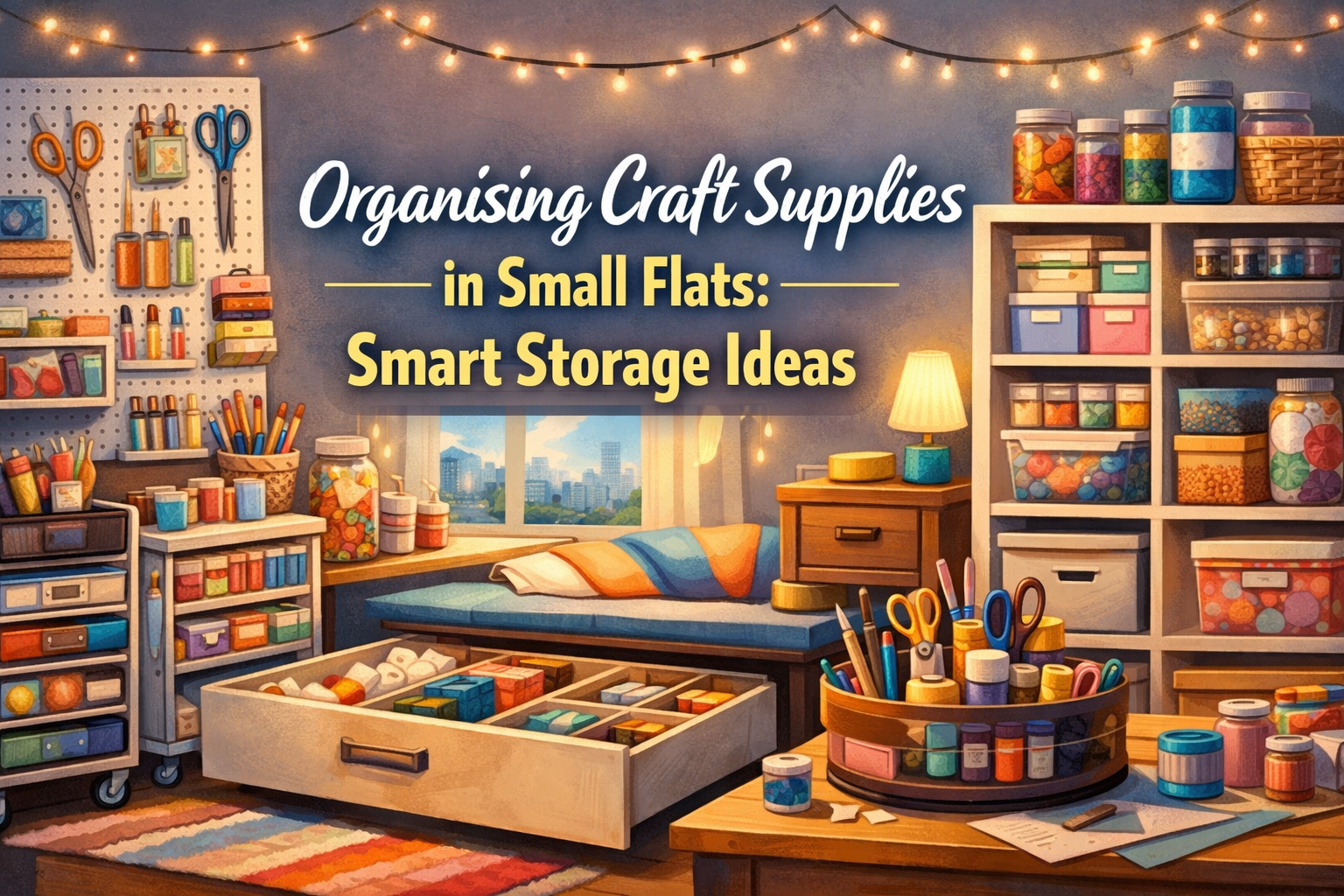
Living in a flat often means balancing creativity with limited space. For people who love crafting, sewing, painting, or DIY projects, this balance can quickly tip into frustration. Supplies multiply, surfaces disappear, and inspiration fades under piles of materials. Organising craft and DIY supplies in small flats is not about perfection or minimalism—it’s about creating a system that supports your creativity without taking over your home.
This guide focuses on organising craft supplies in a way that suits small flats, shared spaces, and modern apartment living. You will learn how to assess your space, choose smart storage, and maintain order over time. The goal is simple: turn hobby chaos into a creative corner that fits your lifestyle, your flat, and your budget.
Key Takeaways
- Small flats can support creative hobbies with the right storage approach
- Dividing supplies into zones prevents clutter from spreading
- Vertical and hidden storage unlocks unused space
- DIY and repurposed solutions reduce costs
- Maintenance systems are essential for long-term organisation
Understanding the Space Challenge in Flats
Before buying containers or rearranging shelves, it’s important to understand how your flat functions. Most flats are multi-purpose by design. The dining table becomes a desk, the living room becomes a studio, and storage is often shared between hobbies and daily life.
Identifying Your Crafting Zones
Instead of forcing all supplies into one corner, it’s often more effective to create micro-zones:
- Messy work zone: Kitchen or balcony for paint, glue, or cutting
- Dry work zone: Living room or bedroom for sewing, drawing, or assembly
- Storage zone: Cupboards, wardrobes, or under-bed areas
This flexible approach allows creativity without permanently sacrificing living space.
Assessing Storage Needs Honestly
Take stock of what you actually use. Separate supplies into three groups:
- Frequently used items
- Occasionally used materials
- Rare or seasonal supplies
This classification will guide where items are stored. High-use tools deserve easy access, while rarely used materials can live higher up or out of sight.
Why Organisation Matters in Small Flats
A well-organised creative setup is not just about appearance. It directly affects productivity, mood, and even finances.
Creativity and Efficiency
When tools are visible and easy to reach, starting a project feels effortless. You avoid the mental friction of searching, unpacking, and cleaning before you even begin. This efficiency leads to:
- Faster project setup
- Shorter cleanup time
- Fewer abandoned ideas
You also avoid buying duplicates because you can clearly see what you already own.
In practice, organising craft supplies reduces setup time, prevents duplicate purchases, and makes creative sessions more enjoyable in small flats.
Mental and Visual Calm
Clutter competes for attention. In small flats, visual noise can make rooms feel smaller and more stressful. An organised system supports mental clarity and creates a calmer home environment where creativity feels restorative rather than overwhelming.
Practical Solutions for Small-Space Craft Storage
The most successful systems focus on flexibility, visibility, and compact design.
Multifunctional Storage Choices
When floor space is limited, storage must work harder:
- Stackable containers: Easy to expand or reduce as supplies change
- Portable caddies: Allow you to move projects between rooms
- Fold-flat storage: Ideal for flats with limited cupboard space
When choosing storage, ask yourself:
- Can I see what’s inside?
- Can I access it without unpacking everything?
- Does it fit where I actually work?
DIY and Repurposed Storage
You don’t need expensive organisers to stay tidy. Many everyday items can be repurposed:
- Shoe boxes for beads, threads, or stamps
- Old toolboxes for sewing kits
- Delivery boxes reinforced for fabric storage
- Kitchen containers for small hardware
Repurposing reduces waste and creates a system tailored to your needs.
DIY Craft Storage Ideas That Work in Flats
Bins, Boxes, and Caddies
- Craft caddies are perfect for daily tools like scissors, pens, and glue
- Fabric bins fit neatly into cube shelves and hide visual clutter
- Collapsible boxes save space when projects are finished
Grouping similar items together inside bins helps maintain order even when storage is shared.
Shoebox and Plastic Container Systems
Uniform containers make stacking and labelling easy. Clear plastic boxes are especially useful for:
- Beads and jewellery components
- Sewing notions
- Paper scraps and embellishments
Below is a quick comparison of common container types:
| Container Type | Best For | Key Benefit |
|---|---|---|
| Craft Caddy | Daily tools | Portability |
| Shoebox Totes | Small items | Stackable |
| Plastic Containers | Mixed supplies | Durable |
| Fabric Bins | Open shelving | Visual calm |
Using Vertical and Hidden Space
Small flats often have unused vertical and hidden areas that are ideal for craft storage.
Walls, Doors, and Hooks
- Wall-mounted shelves above desks
- Pegboards for tools and scissors
- Hooks on wardrobe doors for cutting mats or rulers
Damage-free hooks are especially useful in rented flats where drilling is not allowed.
Under-Bed and High-Level Storage
Under-bed containers are excellent for bulky or seasonal supplies. High shelves or wardrobe tops work well for materials you use only a few times a year.
Combining Style With Practical Organisation
In a flat, storage is often visible. Making it look intentional is just as important as keeping it functional.
Making Storage Part of the Décor
- Choose containers in neutral or matching colours
- Use clear storage to display colourful materials attractively
- Group items symmetrically on shelves
A tidy craft area can enhance your home rather than disrupt it.
Visible vs Hidden Storage Balance
Visible storage works best for inspiring materials you use often. Hidden storage is better for messy or bulky items. Mixing both creates a balanced and calming environment.
Maintaining a Clutter-Free Creative Space
Organisation is not a one-time task—it’s an ongoing habit.
Regular Decluttering
Schedule a review every few months:
- Discard dried or broken supplies
- Combine partial materials
- Re-evaluate what you actually use
This prevents clutter from slowly returning.
Adapting as Interests Change
Your hobbies may evolve. A system that once worked may need adjusting. Modular storage makes these transitions easier without starting from scratch.
Frequency-Based Storage
Store items based on how often you use them:
- Daily tools within arm’s reach
- Weekly supplies in nearby cupboards
- Rare materials stored higher or deeper
This simple rule keeps your workspace efficient.
Conclusion
Organising craft and DIY supplies in small flats is entirely achievable with the right mindset and tools. By understanding your space, choosing flexible storage, and maintaining simple systems, you can enjoy your hobbies without sacrificing comfort or calm.
A well-organised creative corner saves time, reduces stress, and keeps inspiration flowing. Start small, adapt gradually, and remember that organisation should serve your creativity—not restrict it. With thoughtful planning, your flat can support both everyday living and creative joy.
 CALL NOW