
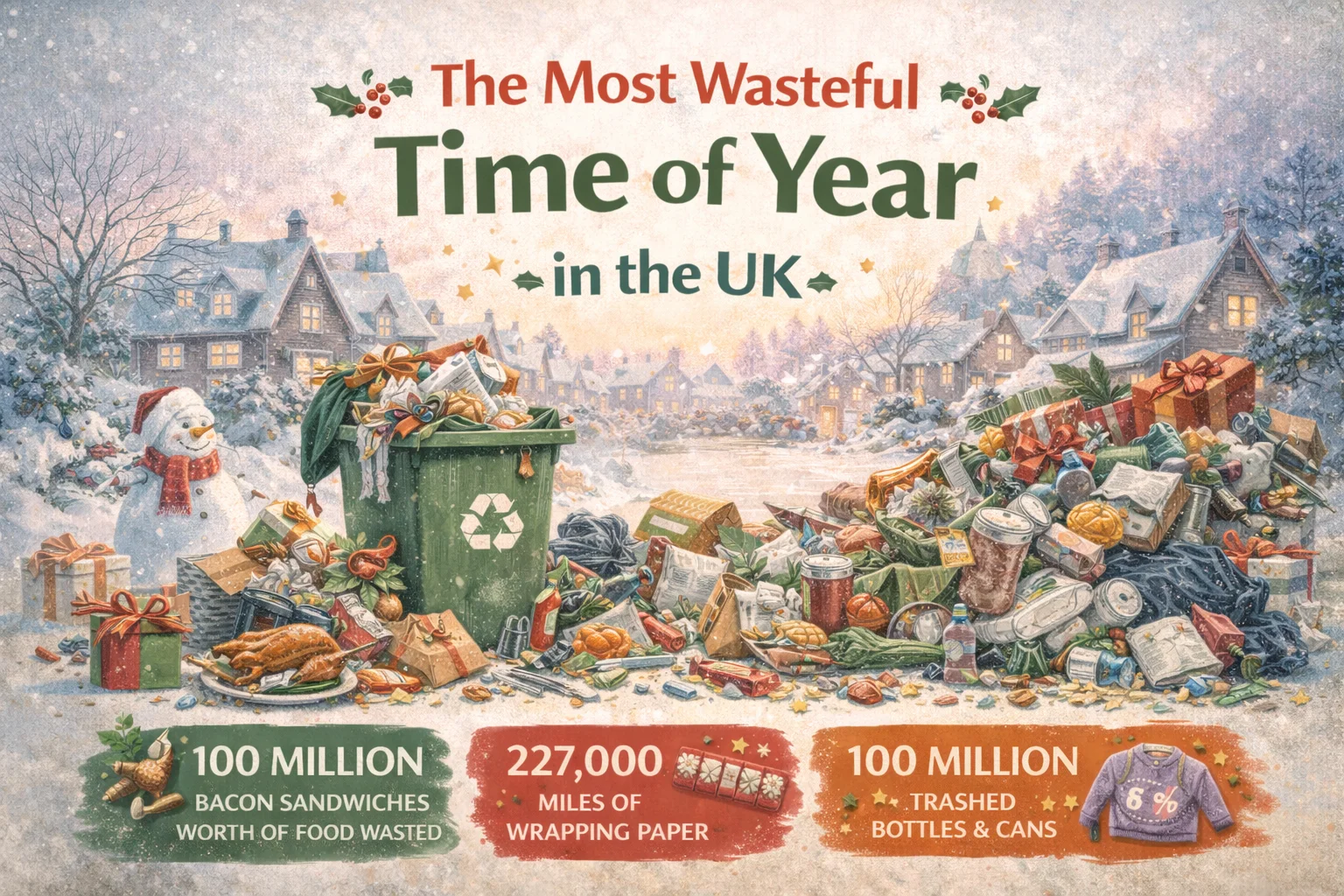
The UK’s festive period is widely seen as the most wasteful time of the year. Households generate around 3 million tonnes of extra refuse, roughly a 30% rise compared with other months. That single statistic shows why small changes can make a big difference.
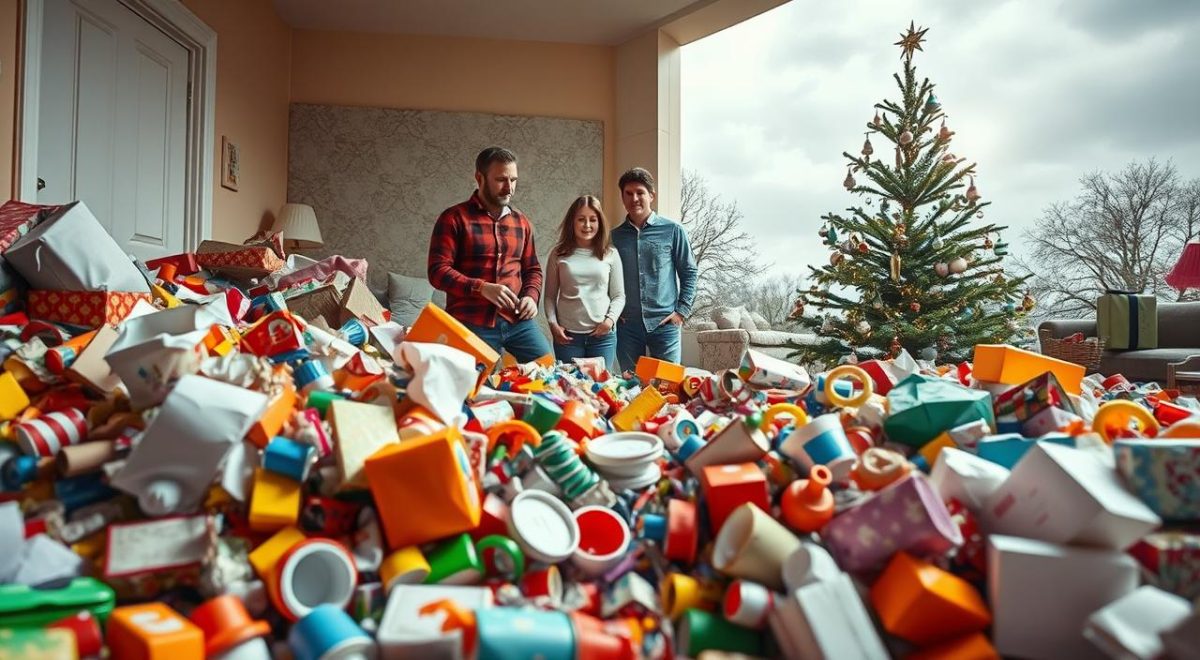
In real homes this spike comes from food left uneaten, extra packaging from gifts and deliveries, and one‑use items when hosting family. This guide will offer a practical, step‑by‑step approach to cut impact while keeping the celebration alive.
Lower impact means: prevent first (buy less, plan meals), then reuse, then recycle correctly rather than relying on last‑minute disposal. The advice is UK‑focused, noting council recycling rules and common materials like sellotape, glitter paper and plastic film.
Read this if you only do one thing: cut overbuying and choose gifts that need less packaging. Later sections cover smarter planning, lower‑impact wrapping and safer leftover management to reduce food and packaging refuse across the holiday season.
Key Takeaways
- The festive period adds about 3 million tonnes of extra rubbish in the UK.
- Focus on prevention first: plan, buy less and manage portions.
- Reuse and repair beat recycling when possible.
- Check local council rules for correct recycling.
- Cutting overbuying and picking better gifts is the most effective single step.
Why the festive season is the UK’s peak waste period
The run-up to Christmas sees a sharp rise in consumption that shows up as fuller bins and busier recycling centres.
Scale and sudden surge. The UK adds roughly 3 million tonnes of extra refuse at this time, about a 30% rise on typical months. Bins fill faster, recycling sacks overflow and many councils log extra tip visits.
https://www.youtube.com/watch?v=QYVWiqnncQ8
The hidden costs and pressure on services
Hard-to-recycle items — glitter paper, plastic-coated wrap and mixed-material packaging — often end up in landfill and raise disposal burden. That pressure brings a direct cost to local authorities; the cleanup and extra collection work is estimated at about £26 million.
Wider environmental consequences
Short-term spikes add to the UK carbon footprint. Production, transport and final disposal increase emissions; Christmas Eve to Boxing Day alone account for just under 6% of annual household carbon output.
- More gatherings, gifting and deliveries create visible excess.
- “Wishcycling”—putting non-recyclables in recycling—contaminates collections and can worsen overall impact.
- Households have most leverage by preventing food loss, cutting packaging and choosing reusables, then recycling correctly.
| Metric | Estimate | Local effect |
|---|---|---|
| Extra seasonal refuse | ~3 million tonnes | Fuller bins, extra collections |
| Seasonal surge | ~30% rise | Increased tip visits |
| Additional public cost | ~£26 million | Pressure on council services |
| Short-term carbon share | ~6% (Dec 24–26) | Higher carbon footprint |
How to reduce waste during holidays with smarter planning and purchasing
Smart buying and simple meal planning prevent oversupply and cut the 230,000 tonnes of food binned over the festive season.
Plan portions by headcount and meals. List who will eat what and halve recipes where appetites are modest. Note leftovers people will actually eat and box them immediately.
Shop your cupboards first
- Inventory freezer space and note use-by dates.
- Plan meals around what you already have.
- Reduce last-minute top-ups that add to packaging and plastic.
Buy better, not more
Set a gift list early and confirm sizes or needs. Adopt a “one meaningful gift” rule to cut unwanted presents and excess packaging.
Experience-led and low-packaging gifts
Choose tickets, memberships or classes to avoid physical items. For presents, favour durable, refillable or minimal-packaging options and avoid unnecessary plastic.
| Hosting option | Pros | Cons |
|---|---|---|
| Real crockery | Reusable, familiar | Needs washing space |
| Borrowed extras | Low cost, reduces buy | Coordination needed |
| Certified compostable | Good if collected | Requires correct disposal |
Before you buy: will you use it next year? Is it repairable? Can it be recycled locally? Share plans with family early and ask guests to bring containers for leftovers—simple ways to protect budgets and resources.

Lower-impact wrapping paper, gifts and packaging (without losing the festive feel)
Gift wrapping can add miles of paper and countless rolls of tape to your household rubbish each year. The UK uses an estimated 227,000 miles of wrapping paper each season and about 40 million rolls of sellotape, so small swaps make a real difference.

Better paper and simple ID tips
Shiny, glittery or foil paper often contains plastic or metal and cannot be recycled. Look for plain or kraft options, recycled content and water‑based inks.
Practical ways to cut tape and packaging
Fold-and-tuck techniques reduce tape use. Try paper tape, reusable ties or ribbon that can be kept for next year.
Festive alternatives that still feel special
- Brown kraft paper with twine or a sprig of greenery.
- Fabric wraps or scarves that double as part of the gift.
- Newspaper-style paper or sturdy gift bags reused for multiple years.
Reuse, recycle and card ideas
Save scraps for small presents, flatten boxes and remove labels before recycling. Plastic film and bubble wrap are rarely kerbside recyclable; use supermarket drop-off points if available.
Choose recyclable cards without glitter or foil. Reuse cards as gift tags or craft them into new cards for the next year.
| Item | Best option | Quick tip |
|---|---|---|
| Wrapping paper | Kraft or recycled paper | Decorate with twine, reuse scraps |
| Tape | Paper tape or fold-and-tuck | Store reusable ribbons and ties |
| Cardboard boxes | Reuse or flatten for recycling | Remove plastic inserts and labels |
Do it right: when in doubt, check your local council recycling guidance to avoid contamination and keep collections effective.
Reduce food waste and manage leftovers safely over the holiday season
Optimism at the shops and duplicate shopping across households are two main reasons so much edible food ends up unused. The UK bins roughly 230,000 tonnes of surplus food each season, so a simple plan pays off.
Stop overbuying with a realistic list
- Make a guest tally and write exact servings per meal.
- Check cupboards first and split shopping tasks between hosts.
- Use a short checklist: mains, sides, one dessert — nothing extra unless certain it will be eaten.
Store leftovers in smaller portions
Portion cooked items into small containers, label with date and keep an “eat first” shelf in the fridge. Smaller pots make it easy to grab a meal and reduce chances people will throw away food.
Quick next-day meals to use excess food
- Roast veg → blended soup.
- Turkey or chicken → quick pies, salads or stir-fries.
- Roast potatoes → hash or bubble-and-squeak.
Compost and donate what you won’t use
Compost vegetable peelings, coffee grounds and paper wrapping if accepted by your local scheme. Donate unopened, in-date goods to food banks, community fridges or neighbours.
| Action | Why it helps | Quick tip |
|---|---|---|
| Portion and label | Prevents forgetting and makes meals convenient | Use clear tubs and date stickers |
| Freeze meal-sized portions | Stops the need to throw away perishable items | Cool before freezing and label contents |
| Treecycling | Trees are turned into mulch instead of landfill | Use council drop-offs or directory services |
Simple household routine: do one leftover audit each day, cook one use-up recipe and decide whether to compost or donate surplus. Small, steady steps cut waste and help the community.
Conclusion
Households can cut the seasonal spike with simple habits that add up year after year. Prevention is the biggest win: plan food, pick better gifts and avoid hard-to-recycle materials to reduce holiday waste.
The stakes are clear — about 3 million tonnes of extra rubbish and roughly a 30% rise in refuse, with an estimated £26 million added cost to councils. Small actions at home lower landfill pressure and shrink your household environmental impact.
Try this short checklist: plan portions, store leftovers in small containers, reuse bags and wrapping, recycle cardboard correctly and resist wishcycling. These quick steps cut packaging and plastic in the bin.
For gifts, favour experiences, durable items and minimal packaging. For trees, keep an artificial tree for many years or use council collections and treecycling so real trees become mulch, not landfill.
Pick three changes to make this year, share the plan with your family and check local recycling resources so your efforts reduce real impact over the years.
 CALL NOW