
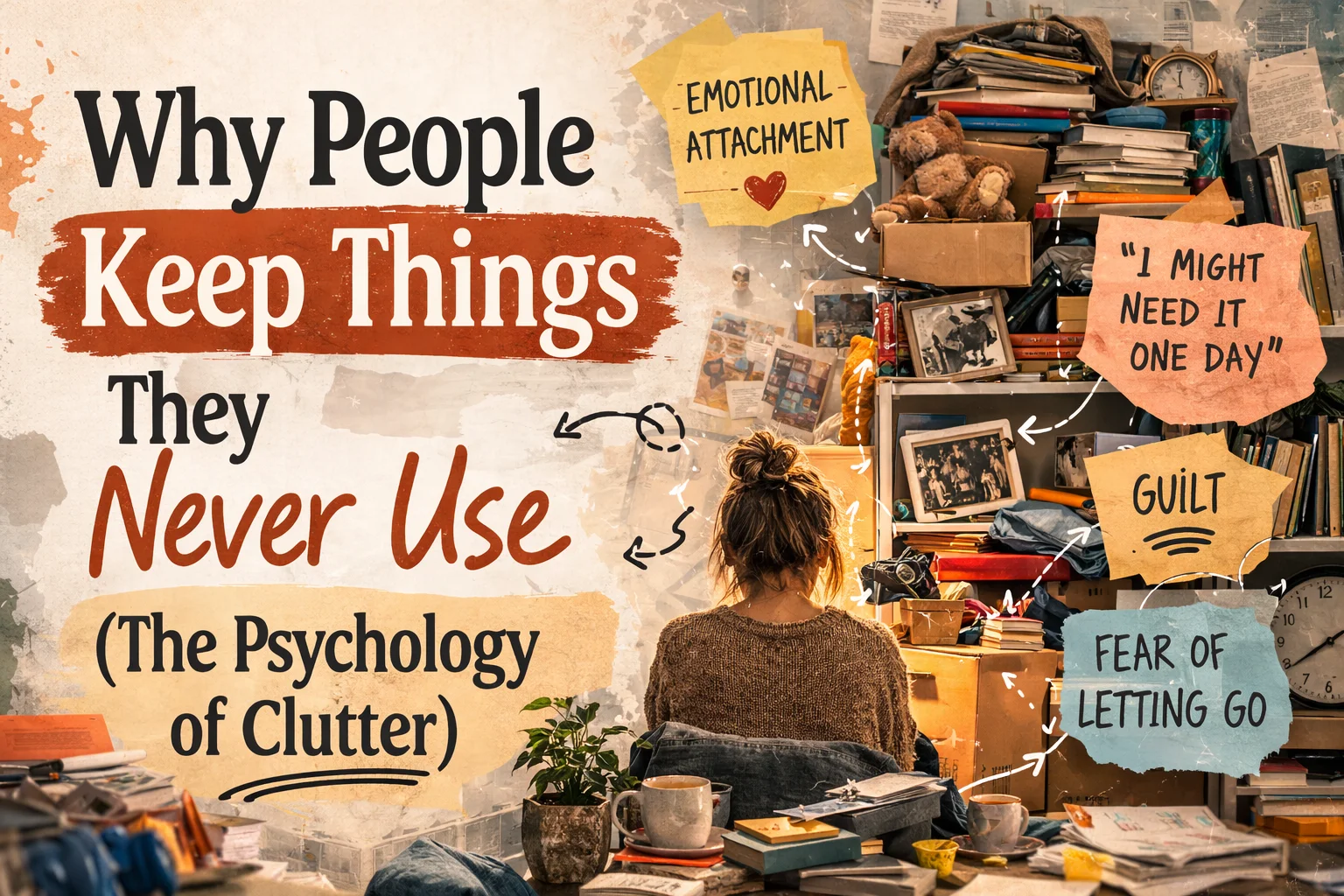
The pile-up of items in a house can happen so slowly it feels normal. Many people wake up one day and find their space filled with things they never use. This guide helps UK readers explore the reasons behind that habit without blame.

We explain how emotional ties, regret aversion and comfort-seeking shape the mind and the environment. You will learn how this pattern raises stress, dents focus and can affect mental health when it harms daily life. This is not about strict minimalism but about getting back calm, choice and function at home.
Later sections offer realistic steps: time-based clearing, the four-pile method and simple systems to stop rebound. We also signpost when hoarding disorder needs professional support and how to spot warning signs.
Key Takeaways
- Clutter often builds gradually and can seem normal until it affects routines.
- Emotional attachment, regret aversion and attention overload drive keeping unused items.
- Untidy spaces increase stress and can harm mental health and focus.
- Practical, non-judgemental strategies restore calm and choice at home.
- Know the warning signs for hoarding disorder and seek support when needed.
What clutter really is (and why it’s not just mess)
Stuff gathers in homes until the space feels smaller than it really is. Clutter means accumulated items that are visible and seldom used. It is different to a one-off tidy-up after a busy day.
Clutter vs everyday untidiness
In UK homes, untidiness can be normal: shoes by the hall, kitchen worktops with pots, or “that chair” with clothes on it. Clutter is more than a lived-in look. It is excess volume, poor storage fit and reduced function — for example, a spare room you can’t use or a table you can’t eat at.
Physical and digital sides
Physical clutter makes a home feel smaller and harder to move through, especially in typical UK-sized properties. Digital clutter — full inboxes, messy desktops and duplicate downloads — creates the same cognitive noise and avoidance.
- Signs you have clutter: unused items, a junk drawer, buying replacements because things are “lost”.
- Blocked access to cupboards, the garage or shed is a clear indicator.
- Clutter acts as an environmental load. It competes for attention and signals unfinished tasks, raising tension even when you try to rest.
| Type | Examples | Main impact |
|---|---|---|
| Physical | Hallway shoes, crowded kitchen worktops, piled chairs | Reduced usable space; harder to maintain |
| Digital | Full inbox, desktop files, duplicated downloads | Cognitive overload; avoidance of tasks |
| Mixed | Boxes in a spare room, receipts in drawers | Limits function of spaces; constant low-level stress |
This guide moves from defining what this looks like to exploring causes, consequences and practical solutions you can use at home.
Why many people keep things they never use
A few misplaced items left each week add up faster than most people expect. Small habits turn into an invisible backlog. Before long, the home feels harder to use.
The “I’ll declutter eventually” time trap
Many people tell themselves “I’ll declutter eventually” because the job seems too big. Decisions get deferred and the backlog grows. This delay becomes a default strategy.
Time doesn’t appear by itself. Modern schedules, decision fatigue and the hidden cost of searching or replacing lost items eat hours. That unseen time keeps the pile rising.
When piles, paper and junk drawers become normal
Entry points are everyday: post, menus, school letters, parcels or half-finished DIY projects. A single junk drawer can become several. Piles of paper turn into avoidance and laundry makes rooms feel unmanageable.
- Concrete signals: items never used, a junk drawer, repeated replacement due to lost things.
- Emotional link: overwhelm makes doing nothing feel safer than choosing.
- Micro-check: if clutter delays simple tasks like paying bills or finding keys, the system—not you—needs changing.
| Common sign | Example | Main impact |
|---|---|---|
| Unused items | Tools or toys left untouched | Lost space and lost time |
| Piles of paper | Post and school letters stacked | Avoidance and missed tasks |
| Junk drawers | One drawer becomes many | Harder to find things |
Later sections will explain the mindset that keeps items in place and offer a simple process to tackle the build-up in manageable steps.
The psychology of clutter: what’s going on in the mind
Belongings often carry meanings that reach beyond their use, quietly anchoring us to past roles and plans. That link between things and identity is one key reason people hold on.
Emotional attachment and identity
Items can stand for “who I am”, “who I was” or “who I plan to be”. Letting go can feel like losing part of the self. This attachment makes decisions harder and slows down any tidy-up.
Memory, sentiment and keepsakes
Clothes, photos and inherited objects act as memory aids. They are a physical way to store a moment. Yet memories do not need every item to stay alive.
Guilt, regret and future needs
Fears — being wasteful, needing an item later, or regretting a choice — keep cupboards full. Regret aversion makes “decide later” the default for many possessions.
Comfort, safety and control
During uncertain times, possessions bring a small sense of predictability. This creates a comforting routine, even when the home feels crowded.
- Goal reminders: brochures and unused kit promise future change but often clutter daily life.
- Anxiety: raises attachment and indecision, making clearing harder.
| Driver | What it feels like | Simple response |
|---|---|---|
| Identity attachment | Items = part of self | Keep one meaningful piece, photograph the rest |
| Sentiment | Memory linked to object | Make a memory box with limits |
| Fear/regret | Worry about waste or need | Set a trial period for storage |
Next step: spot which driver feels strongest for you, then pick a matching decluttering method rather than fighting the feeling.
Environmental psychology and the stress response to chaotic spaces
When rooms are full and routines are broken, the body reacts before the mind does. Environmental psychology shows how our surroundings shape mood and behaviour, and how we then reshape those surroundings in a repeating loop.
How a busy environment raises stress
Research links visible mess at home with higher stress levels. One study found women who reported more clutter had higher cortisol across the day than those with less. That heightened arousal makes it harder to switch off after work and to get real rest.
Household chaos and feeling out of control
Household chaos means constant visual noise, unfinished chores and unclear routines. This produces negative emotions and a steady sense of being out of control.
The more chaotic the space feels, the more the mind stays in monitoring mode rather than relaxing. If home should signal safety and identity, excess items damage that meaning and reduce wellbeing.
Key impacts:
- Increased stress and disrupted recovery at home
- Worse daily mood and lowered resilience
- Greater risk of chronic anxiety and low mood if stress persists
| Factor | What it looks like | Main impact |
|---|---|---|
| Visible mess | Piles, open tasks | Higher daily stress |
| Routine breakdown | Irregular chores, lost items | Reduced recovery at home |
| Meaning loss | Home feels less safe | Lower subjective wellbeing |
Clutter and mental health: stress, anxiety, and low mood
A crowded room can wear down attention until everyday tasks feel heavier.
When many items compete for notice, the brain works harder to filter signals. That extra load reduces concentration and causes mental fatigue.
When clutter contributes to anxiety and depressive feelings
Chronic visual noise creates small daily frictions: lost keys, interrupted routines and unfinished jobs. These build up and raise stress. Over time, repeated interruptions can lead to anxiety and a lower mood. Shame or helplessness about a room that feels unmanageable can deepen depressive feelings.
Why perfectionist tendencies can intensify stress
Some people tolerate visual noise better than others. Perfectionists often read a messy space as a sign of failure. That belief raises the stress response and stops small, effective steps from happening.
- Practical note: clutter is not a moral failing; it reflects systems and capacity.
- Next: we explore how visual noise affects focus and productivity at home and work.
| Issue | What it feels like | Simple response |
|---|---|---|
| Overstimulation | Trouble focusing | Short tidy sessions |
| Chronic stress | Low energy, irritability | Remove visual distractions |
| Perfectionism | All-or-nothing delay | Set tiny goals |
Clutter, focus, and productivity at home and at work
Visible objects compete for attention, turning simple choices into distractions. That competition makes it harder to start a task and slows thinking in a busy environment. The aim here is practical: help spaces work for people, not to create a showroom.
Why a crowded desk pulls the brain
A cluttered desk turns items into tiny reminders. Each object is a potential task on the brain’s radar, so attention hops between things instead of staying on one job.
The practical friction: losing keys, blocked spaces, and slowed tasks
Small frictions add up. Searching for keys, shifting piles to use a surface or clearing a blocked cupboard costs time and raises stress.
| Practical issue | Example | Impact |
|---|---|---|
| Search time | Misplaced Oyster or car keys | Minutes lost; more stress |
| Surface blockage | Worktop piled with post and chargers | Slower starts; context switching |
| Access blocked | Drawer or cupboard full of items | Tasks take longer; fewer usable spaces |
Repeated two-minute searches become a hidden time drain. Over a week those small delays can steal hours and lower productivity at home and during remote work.
Function-first approach: aim for usable surfaces and organised spaces that fit daily life. When everything looks like a job, procrastination is more likely — the next section explains that link in detail and gives ways to break the cycle.
The link between clutter and procrastination
When visual noise builds around a simple job, the brain treats it as a larger project than it really is. That inflated view makes small things feel like big commitments.
How visual overload makes tasks feel bigger than they are
Surrounding mess raises the predicted steps in your head. The mind forecasts extra decisions, more interruptions and extra time before the task can start.
This perceived effort often causes delay. Procrastination becomes a short-term coping move to avoid immediate discomfort.
Everyday examples: bills, laundry piles and stacks of paperwork
Unopened bills in a high stack can stop someone from paying them on time. Laundry piles that spill into the bedroom make getting dressed feel like a chore. Paper that is shuffled rather than processed grows into a visible barrier to action.
- More micro-actions = longer to begin: clear a surface, find documents, locate a pen.
- Avoidance reduces immediate discomfort but raises future stress and friction in relationships.
- Research links cluttered homes with higher procrastination rates, so you are not alone in this pattern.
| Trigger | What it causes | Quick fix |
|---|---|---|
| Visible piles | Tasks feel larger; starting barrier rises | Clear a small area for five minutes |
| Scattered paper | Decision fatigue; unpaid bills | Sort into three folders: action, file, recycle |
| Overflowing laundry | Delays in routines; extra stress | Do a 15-minute wash-and-fold slot |
Teaser: time-boxing and “start with rubbish first” cut the starting barrier and help regain momentum. Later sections show practical steps to protect sleep, health and relationships when things pile up.
Sleep, health, and wellbeing in a cluttered environment
Even small piles on a bedside table send alert cues that make settling down more difficult. The bedroom becomes linked in the mind with tasks, not rest, so the body finds it hard to move into a calm state.
Why a busy room stops you relaxing
Objects that remain visible act as reminders of unfinished jobs. That visual noise keeps the nervous system alert. Falling asleep, staying asleep and reaching deep rest all become harder when the brain expects activity.
How poor sleep feeds next-day strain
Poor sleep lowers patience and motivation the next day. Daytime performance drops, and baseline stress rises. Over weeks this change affects mental health and can increase low mood or depression risk.
- Quick wins: clear bedside surfaces, remove obvious rubbish, and set one laundry zone.
- Keep it realistic: you do not need a showroom. Aim for calm and usable space that supports sleep.
- Why this matters: better rest reduces stress and raises capacity to tackle other rooms and shared living tensions.
| Issue | What happens | Simple fix |
|---|---|---|
| Visual reminders | Nervous system alert | Clear one surface |
| Poor sleep | Lower energy, more stress | Remove bedroom distractions |
| Low mood | Reduced decluttering capacity | Start with 10-minute wins |
When shared rooms fill up, small disputes over space can turn into lasting resentment. In many homes, what looks like a small pile actually affects fairness, autonomy and how “at home” each person feels.

Conflict over space in shared homes
Arguments often follow a clear pattern: one person feels nagged, the other feels criticised or ignored. Repeated rows raise stress and reduce teamwork.
Common effects: chores become battlegrounds, decisions stall and practical daily tasks get harder.
Embarrassment, avoidance of guests, and social isolation
People avoid inviting a friend or family when rooms feel untidy. Avoiding playdates or saying no to last-minute plans is common.
Over time, the habit of not hosting increases loneliness and harms social life. This adds extra emotional weight to already strained relationships.
How background mess affects understanding and communication
Research shows background visual noise can reduce accuracy in recognising emotions on screens. The same effect can happen in real conversations in a crowded space.
When people misread feelings, misunderstandings grow and empathy falls. That makes resolving conflicts harder.
- Agree shared clear zones (dining table, sofa) to protect communal space.
- Define personal zones so everyone keeps control over a small area.
- Set short weekly checks rather than demanding perfection.
| Issue | Example | Simple step |
|---|---|---|
| Fairness | One person clears more | Rotate small tasks |
| Embarrassment | No guests invited | Create a tidy-for-guest corner |
| Miscommunication | Missed feelings in talk | Hold calm, focused chats in clear zones |
Next: we look at modern triggers that create more stuff than homes can manage, and why items arrive faster than we can sort them.
Common clutter triggers in modern life
Modern life supplies more items than many homes can handle in a single week. Emotional shopping, fast delivery and constant advertising all play a part in why things pile up today.
Emotional shopping and short-term relief
Buying can lift mood quickly and give a sense of control when people feel stressed. That short-term relief often adds items that are unused later.
Quick note: a small purchase can fix feelings now, but it may cost time and space later.
Consumer culture, social media and advertising pressure
“Treat yourself” prompts, targeted ads and influencer-led trends push more stuff into homes today. Next-day delivery and constant sales speed up accumulation.
Easy credit and micro-trends mean things arrive faster than they can be processed, so the environment fills before routines adapt.
The “just-in-case” mindset and fear of scarcity
Keeping backups, old tech or duplicates often comes from a real worry about future need or regret. That mindset trades present space for hypothetical readiness.
Reframe readiness: define what “just in case” means for your life today. Limits make preparedness useful rather than a source of clutter.
When it matters: if keeping things causes severe distress, reduced function or unsanitary build-up, professional help may be needed to set clinical boundaries.
| Trigger | Typical examples | Immediate impact |
|---|---|---|
| Emotional shopping | Impulse treats bought when stressed | Short relief; extra unused items |
| Marketing & social media | Influencer trends, targeted ads, sales | Faster arrivals; more things to manage |
| Just-in-case thinking | Backups, old phones, spare cables | Lost space and ongoing decisions |
| Convenience | Next‑day delivery, easy returns | Rapid accumulation; less sorting time |
When clutter may signal hoarding disorder (and when it doesn’t)
When stored items begin to stop daily routines, the issue may be more than ordinary untidiness. Hoarding disorder is a recognised psychiatric condition. It involves a persistent difficulty discarding items and trouble organising belongings, with major impact on daily life.
Key signs to check
- Cramped rooms: beds, cookers or baths become hard to access.
- Reduced function: key spaces lose use; pathways narrow.
- Distress at discarding: intense upset or shame when items are removed.
- Health risks: unsanitary build-up, mould, pests or fire hazards from stacked belongings.
Links, triggers and comorbidity
Research shows links between this disorder and conditions such as OCD and ADHD. One study reported 28–32% of people with ADHD had clinically significant hoarding symptoms. Major life events — bereavement, redundancy or house fire — can worsen saving behaviour.
When to seek help
If items block daily living, create unsafe conditions, or cause severe distress, consider contacting a GP, NHS talking therapies or a specialist therapist. CBT can help with decision-making and regaining control. Early support reduces risk and restores usable spaces.
Decluttering techniques that work when you feel overwhelmed
Starting with a tiny, clear zone changes the task from overwhelming to doable. Pick one drawer, shelf or a single corner and set a realistic time block — five minutes, fifteen minutes or one evening. Small sessions add up and protect you from burnout.
Why time‑boxing works: it lowers the barrier to starting and stops the job spreading into an all‑day ordeal. Treat each block as a discrete step in a simple process.
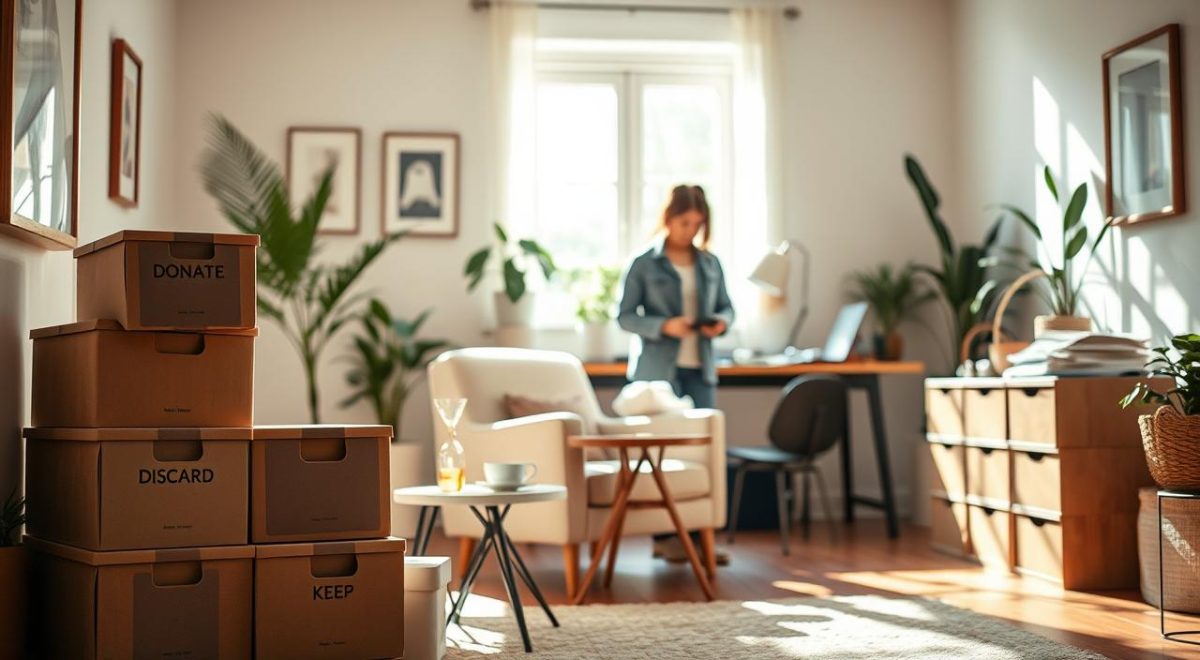
- Four‑pile method: Keep (used, valued), Donate (good condition), Bin (broken/expired), Decide later (set a review date).
- Begin with obvious wins: rubbish, expired toiletries and broken items. Quick clears restore visible space and reduce stress.
- Use the “used in the last year” rule as a default. Allow sensible exceptions for seasonal gear, formalwear and essential documents.
- Ask a trusted friend for help when decisions feel heavy; accountability speeds the process and eases emotional load.
| Action | Example | Why it helps |
|---|---|---|
| Start tiny | One drawer, 10–15 minutes | Reduces overwhelm; builds momentum |
| Four piles | Keep, Donate, Bin, Decide later | Simple choices cut decision fatigue |
| Quick wins | Throw out broken, expired items | Visible progress lowers anxiety |
| Responsible disposal | Charity shops; council recycling; WEEE for electronics | Keeps waste out of landfill; helps others |
UK disposal tips: donate to charity shops such as Oxfam, British Heart Foundation, Cancer Research UK or Sue Ryder. Use local council recycling centres and WEEE schemes for old electronics. Textiles recycling points accept worn fabrics.
If anxiety spikes, stop and return to a smaller task. Repeated, manageable sessions and sensible support are the best ways to reclaim your home and space.
Organising your space so clutter doesn’t return
Organising to match what you actually do prevents items from drifting back onto surfaces. This section shows simple, repeatable steps that keep your home working for your daily life.
Keep key surfaces clear to protect attention and calm
Prioritise kitchen counters, the dining table and your desk as calm zones. Clear surfaces lower visual noise and make it easier to focus.
Storage that fits real routines, not fantasy ones
Place daily items where you naturally reach for them. A key bowl by the front door, a post‑sorting tray on arrival and a labelled folder for school letters save repeated searches and wasted time.
Consistency habits: short resets and weekly checks
Do a 10‑minute end‑of‑day tidy and a short weekly clear. Small, regular actions stop small mess turning into larger problems and give you back a sense of control.
Buy mindfully to keep stuff from returning
Before you buy ask: “Where will this live?” and “Will I use it in the next month?” Pause on impulse purchases and check for duplicates. Thoughtful buying reduces future sorting and keeps the environment manageable.
- Decluttering vs organising: decluttering reduces volume; organising builds a system that fits your routines.
- Practical UK examples: key bowl, post tray, labelled school folder.
- Small habit: ten minutes nightly protects space and attention the next day.
| Action | Example | Why it helps |
|---|---|---|
| Keep surfaces clear | Kitchen counter free | Protects attention; less stress |
| Storage by use | Charging station near sofa | Reduces search time |
| Daily reset | 10 minutes before bed | Maintains control; prevents return |
Mindfulness, motivation, and getting support
A small tidy session can reveal strong feelings that make decisions harder. Noticing those reactions without judging them helps you keep going and reduces shame.
Decluttering as a mindful practice
Pause and name what comes up—guilt, relief, fear or nostalgia. Label the feeling, breathe, then carry on. This simple step keeps emotion in view and prevents it from driving every choice.
Reward systems that help you stick with the process
Design short, achievable sessions that end with a clear before-and-after. Visible progress builds motivation and momentum.
- Small rewards: a cup of tea after 30 minutes, a short walk, or an episode of a favourite show.
- Pick rewards that don’t add more items to the home.
When CBT and therapy can help
If anxiety, guilt or strong attachment makes discarding unbearable, CBT can help challenge unhelpful thoughts and build coping skills. Speak to a GP for referrals, explore NHS talking therapies, or contact Mind for guidance on mental health support in the UK.
Using a temporary holding zone to create breathing space
Box uncertain items and label them with a review date. Short-term storage restores function and gives time to decide without pressure.
| Method | How it works | Safeguard |
|---|---|---|
| Box & label | Pack items you’re unsure about for 1–3 months | Inventory and a firm review date |
| Short-term storage | Use a small rented unit for overflow | Set a cap on space and a final decision deadline |
| Home holding zone | Designate one shelf or box with rules | Monthly review and strict limit |
Remember: be kind to yourself. Self-compassion and steady, structured steps are a practical way to reclaim control and protect your health and daily life.
Conclusion
Many people find that unused possessions quietly take up both space and attention. This guide shows that keeping items is often explained by attachment, identity, regret and comfort, so change starts with understanding not blame.
Real impact: excess clutter raises stress, drains energy, harms sleep and shapes how well you can live in your home.
Small, repeatable steps work best. Try rubbish first, one drawer next or a single surface. Short sessions build momentum and protect time and health.
Keep daily resets and buy mindfully to stop items returning. If belongings block daily living, make spaces unsafe or cause serious distress, seek professional support.
With steady effort your home can support the life you want now. Reclaiming space restores calm, clarity and control for better living.
 CALL NOW