
Do not spoil what you have by desiring what you have not. – Epicurus
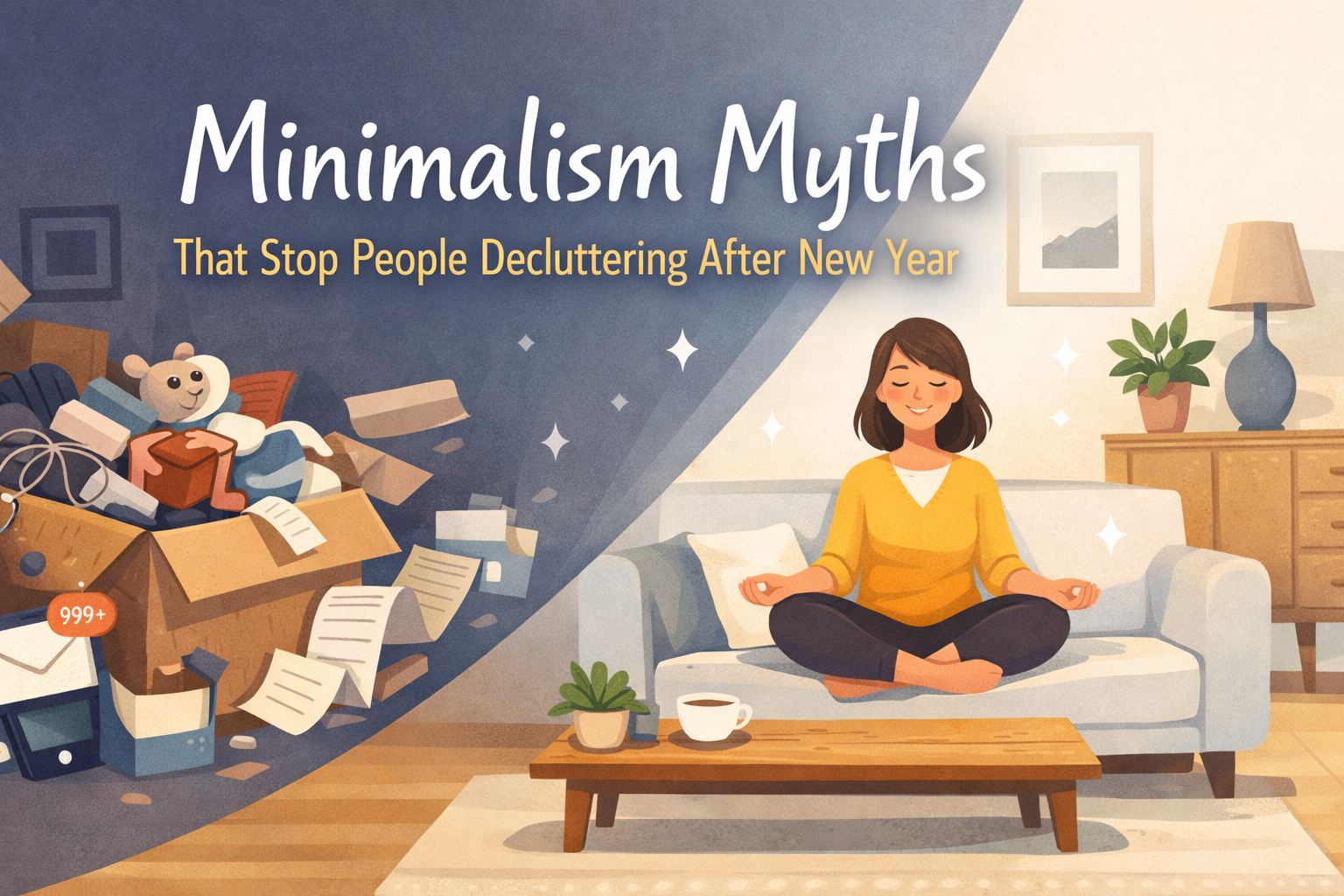
That simple idea sits at the heart of this guide. Every January, many homes start strong with decluttering plans, only to stall by mid-month. However, this usually isn’t about laziness or lack of discipline. Instead, minimalism myths quietly sabotage good intentions.
This UK-focused article separates everyday, realistic minimalism from online noise. We define clutter broadly — not only physical belongings, but also packed schedules, inbox overload and mental weight. Importantly, your version of “enough” will never look exactly like someone else’s, and that’s perfectly fine.
Below, you’ll find practical advice on what to keep, what to let go of, and how to avoid the boom-and-bust cycle that makes New Year decluttering feel exhausting rather than freeing.
Key Takeaways
- January decluttering often fails because of minimalism myths, not weak willpower.
- Clutter includes possessions, time drains and mental load — all deserve attention.
- You can apply minimalist principles without extreme rules or empty rooms.
- Gentle routines beat all-or-nothing clear-outs.
- Advice here is low-pressure, affordable and tailored to UK homes.
Why New Year Decluttering Stalls (It’s Not About Willpower)
January brings “fresh start” energy. Consequently, people often set huge goals: clear the entire house in a weekend, overhaul every cupboard or create a picture-perfect space immediately. Unfortunately, real life interrupts — work resumes, children return to school and motivation dips.
As a result, guilt creeps in. Many people assume they’ve failed, when in reality the plan was simply unrealistic.
How Pressure and Perfectionism Create Burnout
Perfectionism shows up in subtle ways. For example:
- Waiting to declutter until the “right” storage is bought
- Believing the task must be completed in one go
- Comparing progress to idealised homes on social media
These pressures increase decision fatigue. Moreover, fear of regret (“What if I need this later?”) and worries about waste add emotional weight. Importantly, none of this signals weak character — it’s a human response to overload.
What Clutter Really Looks Like in Everyday Life
Clutter isn’t just piles of objects. In fact, it often hides in plain sight.
- A kitchen counter that never fully clears
- A wardrobe full of clothes but “nothing to wear”
- A hallway that becomes a dumping zone
Beyond physical spaces, clutter also appears as:
- Overpacked schedules with no breathing room
- Hundreds of unread emails
- Too many apps pulling attention all day
Being organised is not the same as living with less. Understanding this difference makes decluttering calmer and far more sustainable.
What Minimalism Actually Means in UK Homes
Minimalism is the intentional promotion of the things we most value and the removal of everything that distracts us from it. – Joshua Becker
In practice, minimalism is not deprivation. Instead, it’s intentional living — choosing what deserves space, time and attention.
Intentional Living, Not Empty Rooms
A minimalist approach keeps what supports daily life and personal values. Your home should work for you, not resemble a showroom. Comfort, colour, books and personality all belong if they’re genuinely enjoyed.
Making Space for Quality and Relationships
Letting go often creates room for better experiences. Less time spent clearing, cleaning and managing possessions means more time for people, hobbies and rest.
Your Clutter Threshold Is Personal
What feels calm varies widely. Consider the examples below:
| Household type | Main focus | Practical choice | Result |
|---|---|---|---|
| Busy family | Play & routines | Rotate toys, simplify calendar | Less daily chaos |
| Flatshare | Shared space | Reduce duplicates | Fewer conflicts |
| Couple with hobbies | Gear & clothing | Curated storage | Interests kept, less clutter |
There is no single “correct” amount to own.
Minimalism Myths That Keep People Stuck
Many beliefs about simplifying sound convincing. However, these minimalism myths quietly block progress.
Myth: You Must Get Rid of Everything
In reality, minimalism is selective. You choose what adds value and remove distractions. Treasured items can stay.
Myth: It’s Only for Young or Single People
This belief stops many households from starting. Yet minimalist principles adapt easily to families, shared homes and later life stages.
Myth: You Can’t Be Minimalist with Kids
Children don’t prevent simplicity; they actually make routines more useful. Toy rotation, limits on hand-me-downs and clear storage zones help families thrive.
Other Common Misunderstandings
- Minimalist homes don’t have to be white or bare
- Decluttering can extend to digital and financial habits
- There is no rulebook or item count
- Progress happens over years, not weekends
Letting go often improves focus and wellbeing rather than reducing joy.
What You Gain When You Let Go of the Myths
Once false beliefs loosen their grip, everyday life starts to feel lighter.
More Time, Space and Calm
Fewer distractions mean smoother mornings and quicker cleaning. Rooms support rest instead of adding to the to-do list.
Better Spending and Mindful Shopping
Reduced impulse buying frees money for savings, bills or experiences. Importantly, mindful shopping is a habit — not a ban — and reduces buyer’s remorse.
For guidance on sustainable spending choices, see this MoneyHelper UK budgeting guide.
More Focus on What Matters
With less visual and mental noise, people often notice renewed creativity, better focus and deeper relationships.
How to Declutter After New Year Without Burning Out
Small, finished tasks beat ambitious plans. Aim for visible progress that fits into real life.
Start Small and Finish
Choose one drawer, shelf or bag. Set a 15–30 minute timer and stop when it ends.
Keep What You Use and Love
Simple cues help: does this item support your life now or add genuine value? If not, consider donating, recycling or removing it from sight.
Build Gentle Routines
| Step | Action | Result |
|---|---|---|
| Quick win | One drawer in 20 mins | Visible progress |
| Decision cue | Keep if used or loved | Fewer pointless items |
| Routine | Weekly surface reset | Less daily clutter |
| Shopping pause | Ask “why before you buy” | Fewer impulse buys |
Making Minimalism Work with Real-Life Constraints
UK homes often have limited space, and schedules are full. Therefore, simplicity must bend around life — not the other way round.
Family Life, Hobbies and Sentimental Items
- Use a memory box for sentimental pieces
- Photograph items you don’t want to keep physically
- Apply a one-container rule for hobbies
When Letting Go Feels Emotional
Difficulty is normal. Scarcity memories, identity and guilt often surface. Move slowly and revisit decisions over time.
For responsible disposal options, your local council recycling information via GOV.UK recycling guidance is a useful starting point.
Safety and Preparedness Still Matter
Minimal living still includes sensible safety nets: an emergency fund, useful tools and strong relationships. Security comes from readiness, not excess belongings.
Conclusion
A calmer home and clearer schedule come from steady, small choices. Minimalism is not a test of discipline or perfection — it’s a practical way to protect what matters most.
Often, the biggest barrier isn’t motivation, but believing minimalism myths. Start today with one tiny action: clear a drawer, unsubscribe from an email list or delete one unused app.
There is no single look your life must follow. The right approach is the one that makes your days easier and more intentional. What will you remove this week to make room for what truly matters?
 CALL NOW